Dry Density (ρd)

Dry Density (ρd)

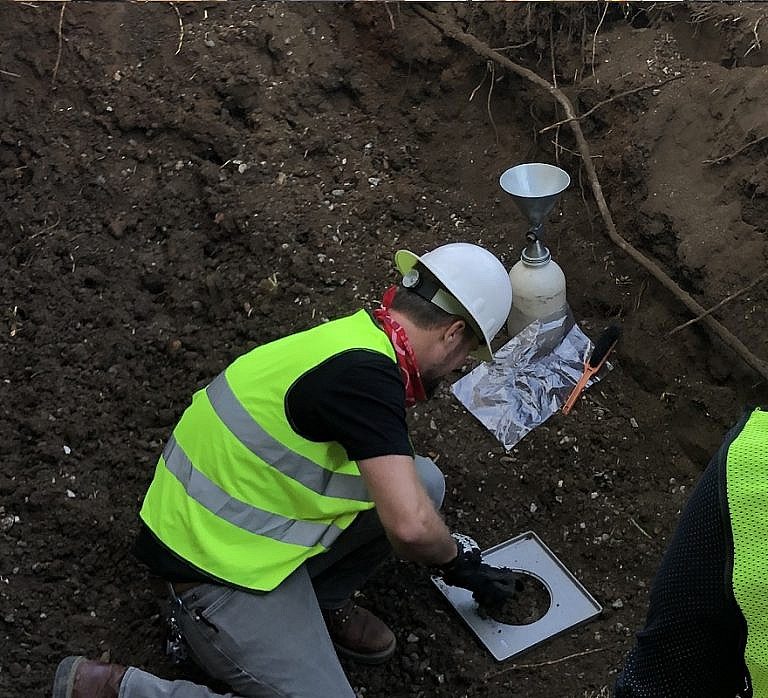
“Dry Density” (ρd) is a value that represents the density of soil when it is completely dry. To illustrate, it equates to (“bulk density” / 1) + “water content.” This is a common geotechnical engineering laboratory procedure.

Dry Density Formula

Dry Density = [(Bulk Density ÷ 1) + (Water Content)]

Similar Posts

  • Unconfined Aquifer

    Unconfined Aquifer Unconfined Aquifer: In the hydrogeology branch of geology, an unconfined aquifer is an aquifer that has a water table. In fact, an unconfined aquifer can only be the uppermost hydrogeologic unit and is particularly one that has no hydraulic head (or pressure) that is equal to atmospheric pressure. To illustrate, depth to groundwater…

  • Geosyncline

    Geosyncline Geosyncline: In geology, a geosyncline is a large-scale indentation in the Earth’s crust that is filled with sediments. A geosyncline forms due to the gradual sinking of the Earth’s crust, causing sediment from adjacent areas to gather inside. An example of a geosyncline is the Appalachian Mountains.

  • |

    Geologic Time Scale

    Geologic Time Scale The Geologic Time Scale is an international system used by geologists to classify and identify major geologic events and formations. The geologic timescale essentially categories the earth’s entire geologic (and biologic) history, within a series of defined eons, eras, periods, epochs, and ages. Updates & Maintenance The geologic time scale is continuously…

  • Potentiometric Surface

    Potentiometric Surface The term “Potentiometric Surface” means the hydrogeological surface that represents the total hydraulic head of groundwater from a confined aquifer or semi-confined aquifer that’s under pressure. The Potentiometric Surface of an aquifer is defined by the level to which water will rise in a groundwater monitoring well (that’s exclusively screened within said aquifer).