
Underground storage tank (UST) removal typically costs $15,000 to $20,000 for a residential heating oil tank and $35,000 to $100,000 for commercial fuel tanks. The price depends on tank sizes, quantities and contents, the degree of underlying contamination, and the location, including how close the tanks sit to existing foundations and property lines. Below is what drives the cost and how to keep it down.
Typical UST Removal Prices
| Tank type | Typical cost |
|---|---|
| Residential heating oil tank | $15,000–$20,000 |
| Commercial fuel tanks (gasoline, diesel, waste oil, solvents) | $35,000–$100,000 |
Commercial projects range from a single 500-gallon waste oil tank to a full gas station with several 10,000-gallon tanks, so the spread is wide. Contaminated soil, groundwater and tight sites push a project toward the top of the range.
Oil Tank Removal Cost
Removing a residential underground heating oil tank typically costs $15,000 to $20,000. That usually covers permits, pumping out the remaining oil and sludge, excavation, tank disposal, soil sampling under the tank, backfill and a closure report. If the samples show the tank leaked, removing and disposing of contaminated soil adds to the cost. Not sure where the tank is? An oil tank sweep finds it first. See oil tank removal for the full process.
What Affects Underground Storage Tank Removal Cost?
- Jurisdiction and permits. Each city, county and state agency sets its own permit fees, plan check and inspection requirements. Some sites need permits from several agencies.
- Number, size and contents of the tanks. More and larger tanks mean more pumping, excavation, hauling and disposal. Gasoline, diesel, fuel oil and waste oil are handled differently.
- Tank material and condition. Corroded steel tanks and tanks with heavy sludge take more cleaning and care.
- Site access and shoring. Tanks next to buildings, property lines or the public right-of-way may need shoring designed by a geotechnical engineer, traffic control or encroachment permits.
- Contaminated soil. This is the biggest variable. If confirmation samples show a leak, contaminated soil must be excavated, profiled, transported and disposed of, and the agency may require more sampling.
- Groundwater. If the tank bottom is near the water table, groundwater sampling may be required.
- Reporting and agency review. Closure reports, agency comments and case closure take professional time.
What the Price Usually Includes
- Permits, plan check and agency notifications
- Site-specific soil management plan and health and safety plan
- Pumping out remaining fuel, water and sludge; cleaning and inerting the tank
- Excavation, shoring if needed, and lifting the tank out
- Tank transport, disposal or recycling, with waste manifests
- Confirmation soil sampling and laboratory analysis by a geologist
- Backfill and compaction testing
- UST closure report and agency case closure
Contaminated soil excavation and disposal, groundwater sampling and further assessment are usually priced separately because nobody knows the extent until the tank comes out.
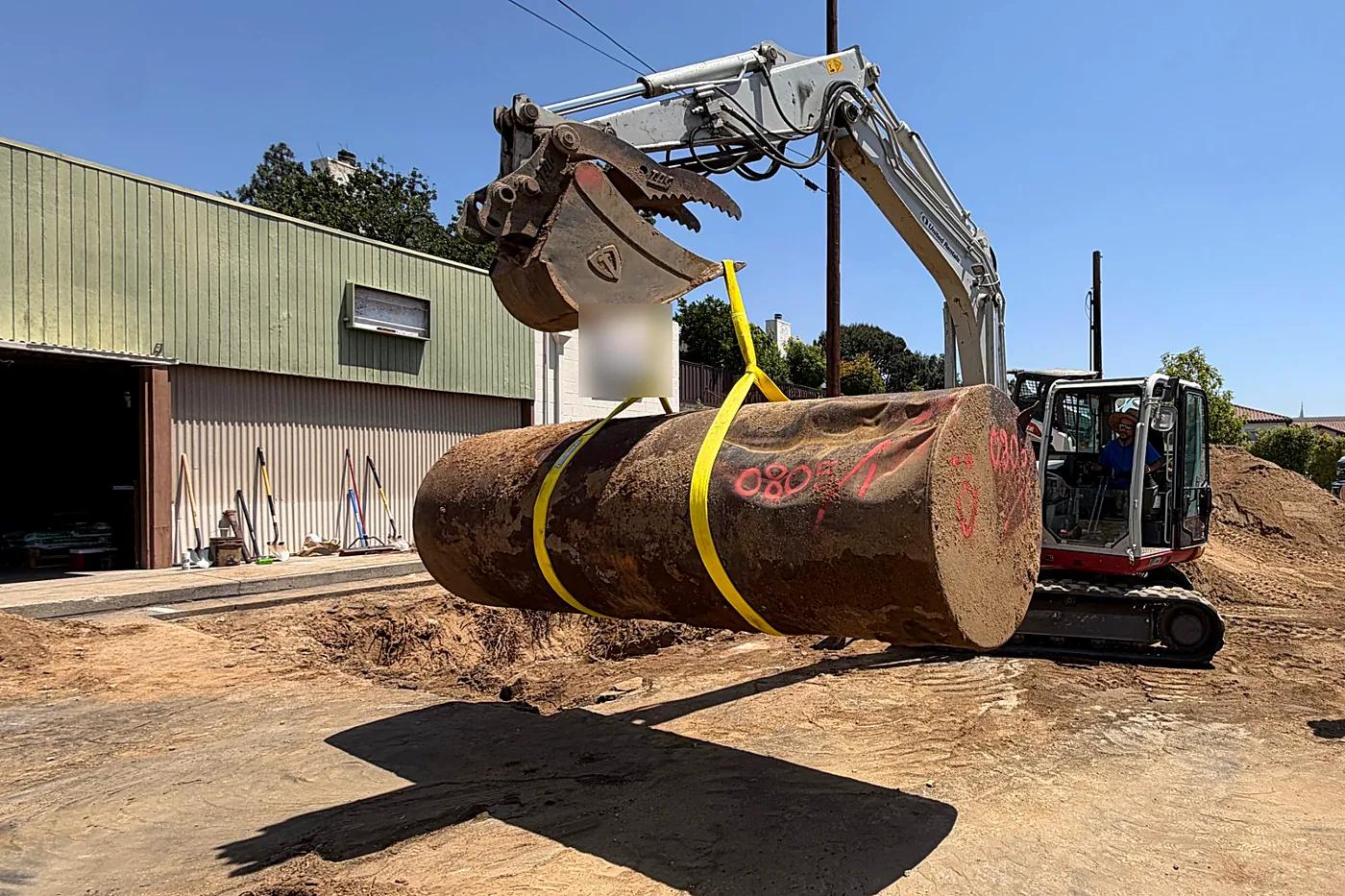
Higher-Cost and Lower-Cost Examples
Higher cost
A fuel tank in the public right-of-way in a large California county. Several agencies oversee the work, and the project needs AQMD Rule 1166 monitoring, a soil management plan, encroachment permits and shoring designed by a geotechnical engineer. Coordination, field inspections and a detailed closure report add professional time.
Lower cost
A single older tank on private property in a jurisdiction that only requires a removal permit and a closure report. With clean confirmation samples, the geologist and contractor can remove the tank under standard practice for much less.
How to Keep UST Removal Costs Down
- Act early. Registering and removing a tank soon after you find it is usually cheaper than waiting for a leak to spread.
- Locate the tank first. A geophysical survey confirms size, depth and piping so the bid and permits are accurate.
- Use one team. Geo Forward self-performs UST removal under California contractor license (CSLB Lic. No. 1010931) with a Licensed Professional Geologist overseeing sampling and reporting, so there is no hand-off between a consultant and a separate contractor.
- Plan around a sale or loan. If a Phase 1 ESA flags a tank, schedule the removal before closing so it doesn’t hold up the deal.
Underground Storage Tank Removal Cost FAQs
How much does it cost to remove an underground storage tank?
Residential heating oil tank removal typically costs $15,000 to $20,000. Commercial fuel tank removal typically costs $35,000 to $100,000, depending on tank sizes, quantities and contents, contamination, the jurisdiction, and proximity to foundations and property lines.
How much does it cost to remove an underground oil tank?
A residential underground heating oil tank typically costs $15,000 to $20,000 to remove, including permits, pumping, excavation, disposal, soil sampling and a closure report. Contaminated soil adds to the cost.
What is the most expensive part of UST removal?
Contaminated soil. If confirmation samples exceed agency action levels, the soil must be excavated, profiled, hauled and disposed of, and the agency may require more assessment before case closure.
Is it cheaper to close a tank in place than to remove it?
Not always. Closure in place still requires permits, cleaning, filling the tank with an inert solid and soil sampling, and many agencies prefer or require removal. Closure in place is usually chosen when removal would undermine a building or foundation.
Does a heating oil tank cost less to remove?
Yes. Residential heating oil tank removal typically costs $15,000 to $20,000, compared with $35,000 to $100,000 for commercial fuel tanks. See oil tank removal for details.
How do I get an accurate price?
Call (888) 930-6604 with the site address, the number and size of tanks if known, and any reports such as a Phase 1 or Phase 2 ESA. Geo Forward provides UST removal nationwide.
Ready for a price? See our underground storage tank removal services or call (888) 930-6604.
Sources:
U.S. EPA Underground Storage Tanks
40 CFR Part 280: Technical Standards for Underground Storage Tanks (eCFR)
California State Water Resources Control Board UST Program
California Contractors State License Board