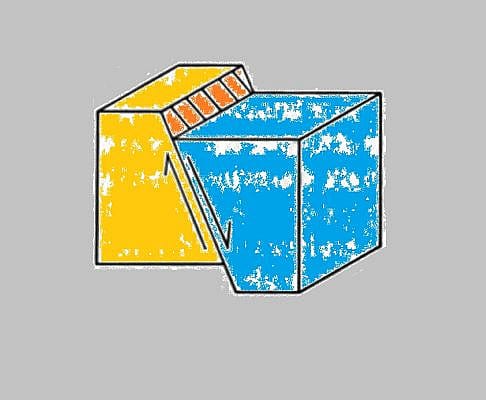
Dip-Slip Fault Definition

Similar Posts

  • Impervious Membrane

    Impervious Membrane in Methane Mitigation Impervious Membrane: In accordance with the Los Angeles Department of Building and Safety (LADBS) Methane Code, Ordinance Number 175790, an impervious membrane is a continuous methane gas barrier. It is a crucial part of the methane mitigation process and underlies a building to impede the vapor intrusion of methane soil gas….

  • Mechanical Extraction System

    Mechanical Extraction System Mechanical Extraction System: Per the Los Angeles Department of Building and Safety (LADBS) Methane Code, Ordinance Number 175790, a Mechanical Extraction System is one of the Active Methane Mitigation criteria for methane mitigation systems in buffer zones and methane zones.  A mechanical extraction system uses machines that remove methane gas from below…

  • Fault Creep

    Fault Creep Fault Creep: Fault creep means slow ground displacement of a strike-slip fault or dip-slip fault, that usually occurs without accompanying earthquakes. Fault creep can derive from tectonic activity, or be the result of excessive petroleum and groundwater pumping.

  • Reverse Fault Definition

    Reverse Fault Reverse Fault: In the field of geology, a reverse fault is a dip-slip fault in which the hanging wall moves upwards, relative to the footwall. The average dipping angle of a reverse fault ranges from 45 to 90 degrees. However, if less than 45 degrees, it becomes a “thrust fault.” Reverse faults are…

  • Effective Stress (σ’)

    Effective Stress (σ’) “Effective Stress” (σ’) is a geotechnical engineering term. Effective Stress is a function of “total stress,” and is due to the solid particles of soil. Effective stress represents an excess of stress above pore-water pressure (or neutral stress). Effective Stress Formula Effective Stress = Total Stress – Pore-Water Pressure.