
Strike-Slip Fault (Transform Fault) Definition

Strike-Slip Fault or Transform Fault

Strike-Slip Fault (Transform Fault): In the field of geology, a strike-slip fault, or a transform fault, is a fault in which movement is parallel to the strike of the fault plane. The opposite of a strike-slip fault is a dip-slip fault.

Left-Lateral or Right-Lateral Strike-Slip Fault

A transform fault can be either left-lateral or right-lateral. This defines the type of strike-slip fault-movement. It is determined by selecting one block as a reference. And then examining the movement of the other block in relation to the referenced. To simplify, geology students and geologists in the field imagine themselves standing on the reference block, looking outward to the moving block.

Left-Lateral Strike-Slip Fault

For instance, a left-lateral strike-slip fault means the block opposite from which one is standing, moves left. The image below provides a block diagram of a left-lateral strike-slip fault or left-lateral transform fault. In this case, the field geologists would picture themselves standing on the blue block. Note the directions of the arrows.
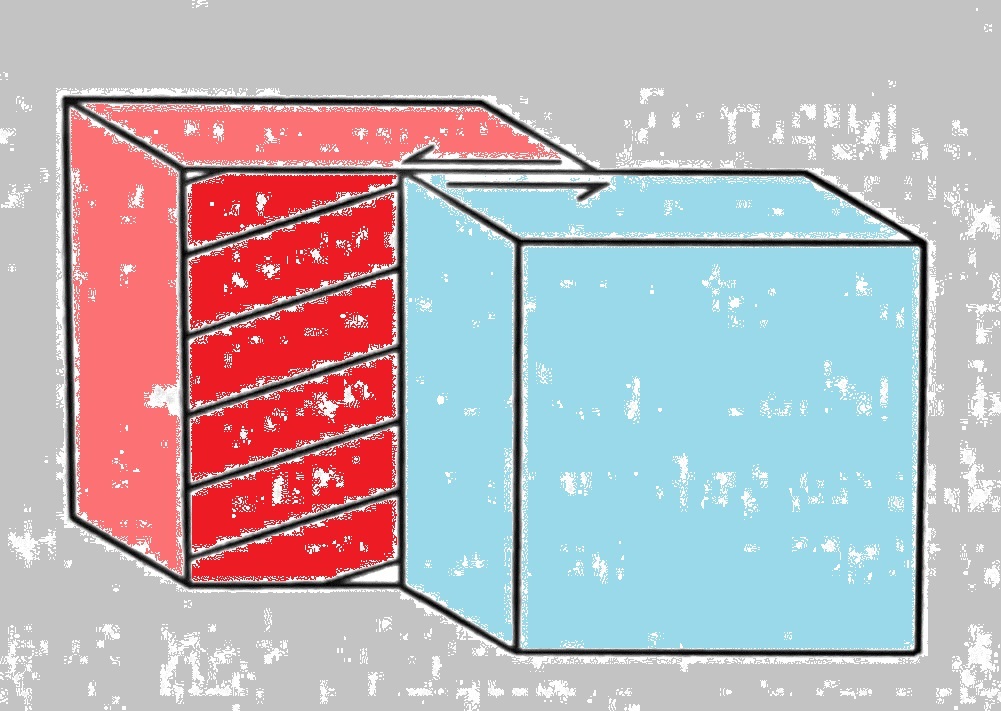
Block Diagram of a Left-Lateral Strike-Slip Fault or Left-Lateral Transform Fault
Block Diagram of a Left-Lateral Strike-Slip Fault or Left-Lateral Transform Fault – By Geo Forward

Right-Lateral Strike-Slip Fault

A right-lateral transform fault means the block opposite from which one is standing upon is moving right. To illustrate, the image below provides a block diagram of a right-lateral strike-slip fault or right-lateral transform fault. Here, the geologists would imagine themselves on the red block. And please note the directions of the arrows.
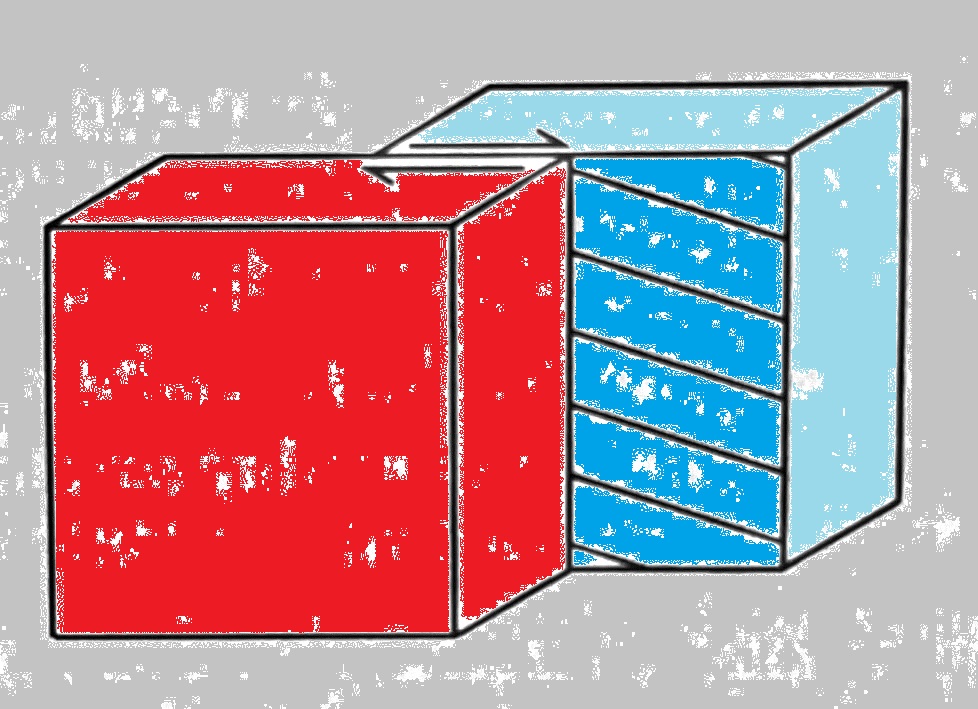

Block Diagram of a Right-Lateral Strike-Slip Fault or Right-Lateral Transform Fault
Block Diagram of a Right-Lateral Strike-Slip Fault or Right-Lateral Transform Fault – By Geo Forward

Similar Posts

  • Fault Scarp

    Fault Scarp Fault Scarp: In the field of geology, a dip-slip fault scarp is a steep slope that is formed directly by fault movement. It occurs along the line of a normal fault, reverse fault, or transform fault. A fault scarp represents the planer surface of the fault before erosion and weathering modify it.

  • Methane Mitigation Soil Gas Pressure Sensor

    Methane Mitigation Soil Gas Pressure Sensor Methane Mitigation Soil Gas Pressure Sensor: A Methane Mitigation Soil Gas Pressure Sensor is a device that measures and communicates sub-slab soil gas pressure to a methane control panel system. High levels of methane soil gas then trigger the integrated methane alarm system to notify occupants of danger. Much…

  • Settlement

    Settlement Definition In the field of geology, The term settlement means a gradual downward movement of the ground surface. This is generally due to soil compression at on a larger scale, atdepths that are below the ground surface.

  • Methane Alarm System

    Methane Alarm System Methane Alarm System: As per the Los Angeles Department of Building and Safety (LADBS) Methane Code, Ordinance Number 175790, a methane alarm system is part of an active methane mitigation plan. A methane alarm system is a group of interacting components and circuits that synchronize to monitor and annunciate the status of…

  • Feldspars

    Feldspars Feldspars: In the field of geology, and the branch of mineralogy, feldspars are a mineral group, that is the most common amongst the earth’s crust. In fact, there are two types of feldspars: plagioclase feldspar and orthoclase feldspar.