Environmental Consultant

Environmental Consultant

Environmental Consultant: An environmental consultant is an expert of any profession or field, who focuses their skills and knowledge towards matters that improve the environment. Environmental consultants are typically scientists with expertise in geology, chemistry, physics, and engineering.

Environmental Consultants Working Towards Environmental Sustainability

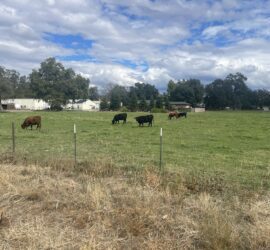
Environmental consultants generally provide professional services that aim towards humanity reaching 100% environmental sustainability. For instance, sustainable agriculture consultants assist farmers with eco-friendly strategies to create and operate a self-sustaining farm that is harmonious with the environment it is situated within.

Environmental Professional in Environmental Geology

In the environmental geology, engineering, and due diligence fields, the All Appropriate Inquiries (AAI) Rule provides qualifications for any practicing environmental consultant, also known as an environmental professional. And in accordance with the Environmental Protection Agency (EPA) and federal cleanup regulations, these qualifications must be met for any environmental consultant to perform Phase 1 Environmental Site Assessments, Phase 2 Environmental Site Assessments, or Transaction Screen Assessments.
Similar Posts

  • Effective Stress (σ’)

    Effective Stress (σ’) “Effective Stress” (σ’) is a geotechnical engineering term. Effective Stress is a function of “total stress,” and is due to the solid particles of soil. Effective stress represents an excess of stress above pore-water pressure (or neutral stress). Effective Stress Formula Effective Stress = Total Stress – Pore-Water Pressure.

  • Index Fossil

    Index Fossil Definition An Index fossil, in the field of paleontology, refers to a fossil that identifies and dates the stratigraphic unit that it is observed to exist in. Index fossils can combine a wide geographic range. And they can really narrow down the classifications of most stratigraphic units.

  • Maximum Soil Screening Levels (MSLs)

    Maximum Soil Screening Levels (MSLs) Maximum Soil Screening Levels (MSLs): MSLs are a list of risk-based hydrocarbon concentrations for soil pollution evaluations, that is developed by the California Regional Water Quality Control Board. These screening levels are based on the Leaking Underground Fuel Tanks (LUFT) Manual, for cleaning up soil contamination from leaking USTs. However, MSLs…

  • Methane Soil Gas

    Methane Soil Gas Methane Soil Gas: In geology, methane soil gas refers to the confinement of CH4 within the interstitial pore spaces of subsurface soils. On Earth and potentially on Mars, methane derives from subsurface pockets of biogenic and petrogenic natural gas. To illustrate, accumulations of buried organic matter decay via microbial or thermal degradation….

  • Retaining Wall

    Retaining Wall Retaining Wall: A structure that provides the support needed to hold (in place) a mass of earth, preventing it from moving downhill. Retaining walls are relatively rigid structures comprising footings and a drainage system, in order to retain the soils between two different elevations. Updated May 25, 2020. Construction & Design A lot…