Vent Riser in Methane Mitigation

Vent Riser in Methane Mitigation

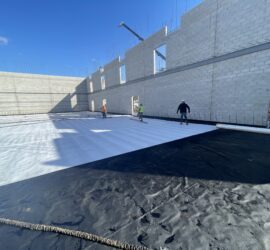
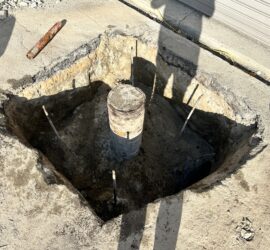
Vent Riser in Methane Mitigation: As per the Los Angeles Department of Building and Safety (LADBS) Methane Code, Ordinance Number 175790, a vent riser is a cast iron or ABS pipe that runs through the building walls (vertically). A vent riser is part of a methane mitigation system and has joints and fittings that connect to the perforated horizontal pipes under the impervious membrane. This device conveys methane soil gas from under the methane barrier, and discharges it into the atmosphere.

Similar Posts

  • Methane Mitigation Soil Gas Pressure Sensor

    Methane Mitigation Soil Gas Pressure Sensor Methane Mitigation Soil Gas Pressure Sensor: A Methane Mitigation Soil Gas Pressure Sensor is a device that measures and communicates sub-slab soil gas pressure to a methane control panel system. High levels of methane soil gas then trigger the integrated methane alarm system to notify occupants of danger. Much…

  • Concrete Arch Dam

    What is a Concrete Arch Dam? A Concrete Arch Dam is a curved freshwater-retaining structure that is concave in the hydro-geologically down-gradient direction, and uniformly thick from the base to top. With Concrete Arch Dams, a major part of the water load value gets distributed to the abutments of the dam. Thus, Concrete Arch Dams…

  • Extrusive Rocks

    Extrusive Rocks Extrusive Rocks: In the volcanology branch of geology extrusive rocks are igneous rocks that have been erupted onto the Earth’s surface, before forming and crystallizing. On the other hand, intrusive rocks form and crystallize under the Earth’s ground surface. Extrusive rocks are typically microcrystalline and aphanitic, because of the faster rate of cooling…

  • Juvenile Water

    Juvenile Water Juvenile Water: In geology, juvenile water is water derived directly from magma, introduced into the Earth’s surface through geological processes such as magmatic and volcanic activity. Since juvenile water is derived from Earth’s center, its characteristics, are associated with higher temperatures and pressures.

  • Dry Density (ρd)

    Dry Density (ρd) “Dry Density” (ρd) is a value that represents the density of soil when it is completely dry. To illustrate, it equates to (“bulk density” / 1) + “water content.” This is a common geotechnical engineering laboratory procedure. Dry Density Formula Dry Density = [(Bulk Density ÷ 1) + (Water Content)]