
Green demolition (also called sustainable, eco-friendly or environmental demolition) takes a building or site down in a way that removes hazardous materials safely, cleans up what is underground, and recycles or reuses as much material as possible instead of sending it to a landfill. Geo Forward handles the environmental side of demolition: pre-demolition hazardous materials surveys, underground tank, clarifier and hydraulic lift removal, contaminated soil, soil management and the documentation agencies and lenders ask for. Call (888) 930-6604 or request a proposal.
Green Demolition Services
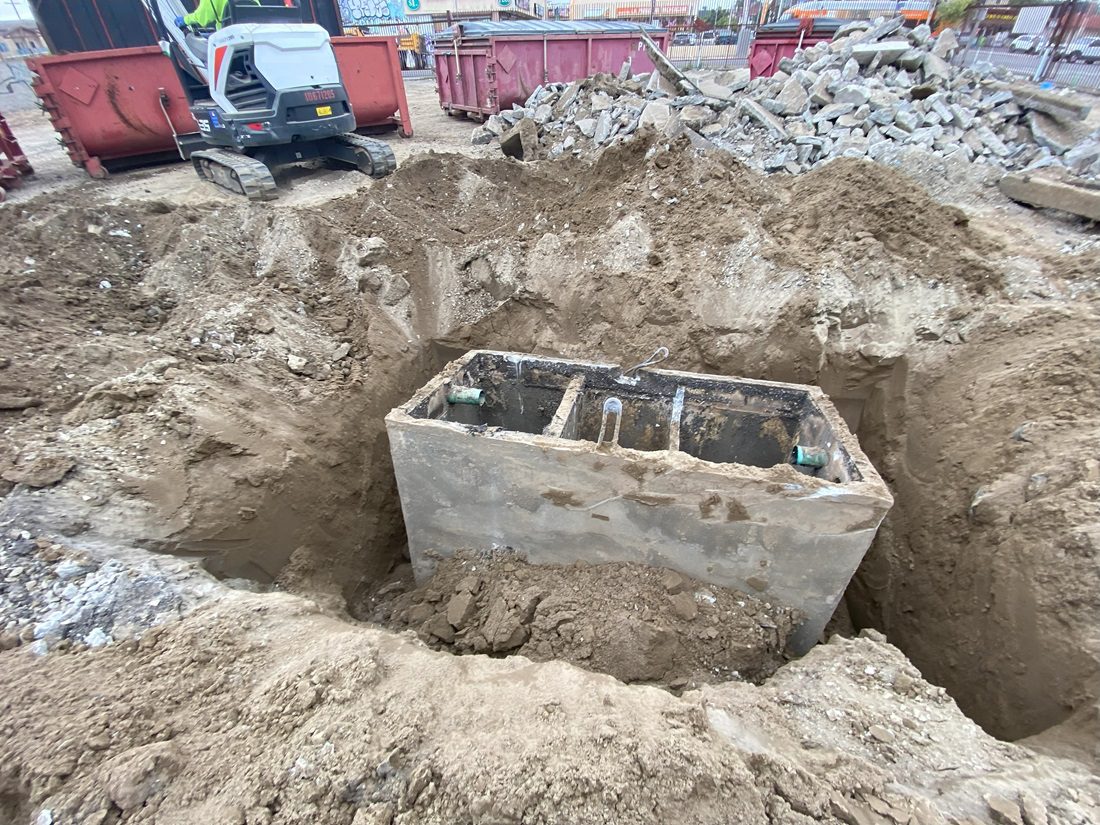
- Pre-demolition hazardous materials surveys, including asbestos surveys and lead-based paint screening
- Underground storage tank removal and oil tank removal
- Hydraulic lift and hydraulic elevator removal
- Clarifier, sump and grease interceptor removal with soil sampling
- Contaminated soil removal found during demolition
- Soil management plans and health and safety plans
- Grading and excavation after structures come down
- Recycling and diversion documentation for building department sign-off
Green Demolition vs. Traditional Demolition
| Traditional demolition | Green demolition | |
|---|---|---|
| Materials | Mostly mixed debris to landfill | Sorted for salvage, reuse and recycling |
| Hazardous materials | Handled when required | Surveyed and removed first, by plan |
| Underground features | Often left or crushed in place | Tanks, lifts and clarifiers removed and sampled |
| Soil | Contamination found late, if at all | Screened and managed under a soil management plan |
| Documentation | Minimal | Diversion, disposal and closure records for agencies and lenders |
Key Principles of Eco-Friendly Demolition
Hazardous Material Management
Older buildings often contain asbestos, lead-based paint, PCB-containing light ballasts and other regulated materials. Under the federal asbestos NESHAP, demolition of commercial, institutional and industrial buildings requires a thorough asbestos inspection before work begins, and written notice to the air agency at least 10 working days before demolition. Removing these materials first protects workers, neighbors and the recycling stream.
Material Salvage and Recycling
Concrete, asphalt, metals, wood and other materials are separated so they can be crushed, recycled or reused. In California, the CALGreen building code requires covered new construction and demolition projects to recycle or salvage at least 65% of nonhazardous construction and demolition waste, and many cities require a waste management plan and weight tickets before final sign-off.
Protecting Soil, Air and Groundwater
Dust control, stormwater protection and careful handling of tanks and sumps keep contamination from spreading. Soil around tanks, lifts and clarifiers is sampled so problems are found and fixed during demolition, not after a new building is on top of them.
Energy and Waste Reduction
Sorting on site, reusing crushed concrete as base material and limiting truck trips all reduce fuel use and disposal costs.
Underground Tanks, Lifts and Clarifiers During Demolition
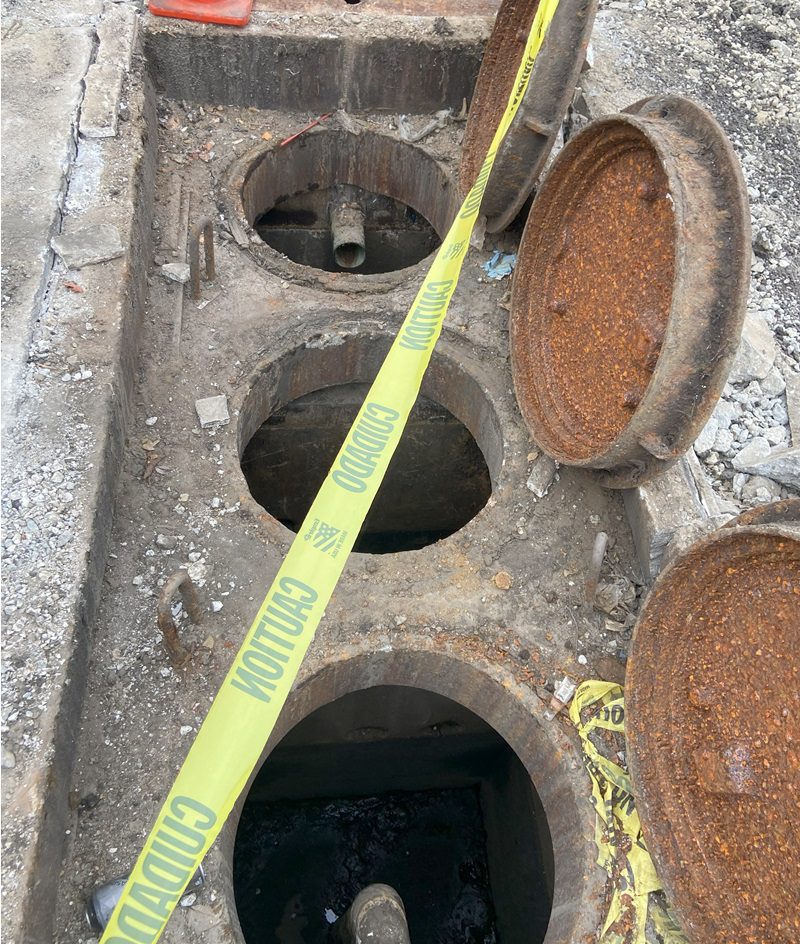
Gas stations, auto shops, dry cleaners and industrial buildings often hide underground features that need special handling. An underground storage tank found in a Phase 1 Environmental Site Assessment usually needs a permitted removal with soil sampling. Hydraulic lifts and clarifiers need the same care. A geophysical survey before demolition locates these features, and a Phase 2 ESA or limited subsurface investigation shows whether the soil is affected, so the cleanup can be planned into the demolition schedule.
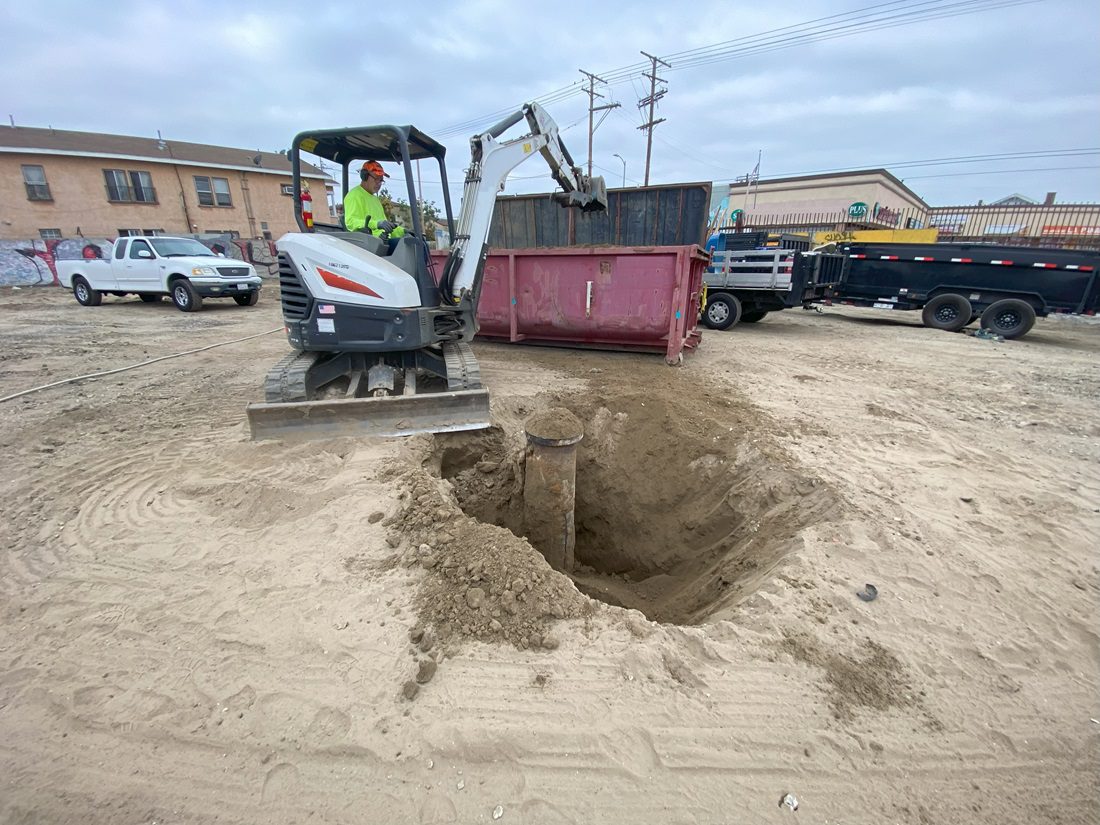
The video below shows an in-ground hydraulic lift being removed, a common step when an auto shop is demolished.
▶
Our Green Demolition Process
- Review records, including any Phase 1 ESA, permits and building plans.
- Survey hazardous materials and locate underground features with geophysics.
- Plan the work: soil management plan, health and safety plan, recycling plan and permits.
- Remove hazardous materials and underground features, with soil sampling at each.
- Clean up contaminated soil if sampling shows it is needed.
- Document disposal, recycling and sampling results for the agency, lender or buyer.
Benefits of Green Demolition
- Fewer surprises: tanks and contamination are found before construction, not during it.
- Lower disposal cost: recycled concrete, metal and clean soil cost less than landfill disposal.
- Faster approvals: complete records help building departments, agencies and lenders sign off.
- Healthier neighborhoods: less dust, safer handling of hazardous materials and less landfill waste.
Why Choose Geo Forward
- Geologists on the demolition site who know what to look for underground. Work is reviewed by Adam Azad Kaligi, PG, with field work by Michael Sabo and HAZWOPER-trained staff.
- Licensed contractor (CSLB Lic. 1010931) for excavation, tank and lift removal.
- From Phase 1 to closure under one roof.
- Offices in Los Angeles, Pasadena, El Segundo, North Hollywood, Santa Clarita, San Francisco and Houston.
Green Demolition FAQs
What is green demolition?
Green demolition is a sustainable way to take down a building or site. Hazardous materials are surveyed and removed first, underground tanks and contamination are cleaned up, and concrete, metal and other materials are recycled or reused instead of landfilled.
Do I need an asbestos survey before demolition?
For commercial, institutional and industrial buildings, the federal asbestos NESHAP requires a thorough asbestos inspection before demolition and written notice to the air agency at least 10 working days before work starts. Many local agencies add their own rules.
How much demolition waste must be recycled in California?
The CALGreen building code requires covered new construction and demolition projects to recycle or salvage at least 65% of their nonhazardous construction and demolition waste. Cities enforce it through waste management plans and weight tickets.
What happens to underground tanks during demolition?
Tanks should be located, permitted, emptied, removed and sampled, with any contaminated soil cleaned up. Leaving a tank in place or crushing it during demolition can create a much bigger cleanup later.
Is green demolition more expensive?
It can cost a little more up front because of sorting and surveys, but recycling usually lowers disposal costs, and finding tanks and contamination early avoids expensive delays during construction.
Need help with green demolition? Call (888) 930-6604 (Monday to Friday, 8 am to 5 pm PT) or request a proposal.
Sources:
U.S. EPA: Asbestos NESHAP
40 CFR 61.145: Standard for Demolition and Renovation
CalRecycle: Construction and Demolition Diversion
U.S. EPA: Sustainable Management of Construction and Demolition Materials
U.S. EPA: Underground Storage Tanks