Active Methane Mitigation System

Active Methane Mitigation

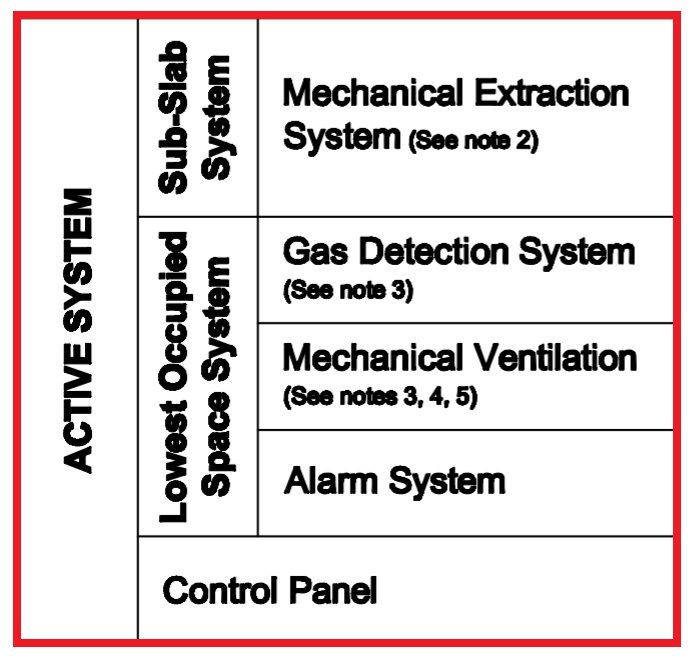
Active Methane Mitigation: Active systems refer to the mechanical and electrical components of a methane mitigation system. In fact, the definition of an Active System is available in Methane Code (Ordinance No. 175790). This is a publication by the Los Angeles Department of Building and Safety (LADBS). Moreover, further descriptions of an active system are available in the LADBS Standard Methane Plans. As per these sources, an Active Methane Mitigation System includes:

  1. Mechanical Extraction System;
  2. Methane Gas Detection System;
  3. Mechanical Ventilation System;
  4. Methane Alarm System; and
  5. Control Panel.
Active Methane Mitigation System Los Angeles LADBS Geo Forward

Similar Posts

  • Well Log

    Well Log (Boring Log) Well Log: A geological well log (or boring log) is a detailed record of subsurface materials encountered during a drilling project. Boring logs, or well logs, are written by a geologist, and describe the physical subsurface characteristics and lithological units encountered during well-plotting. Well logs include information about depth, different formations,…

  • Toe of a Slope

    “Toe” of a Slope Definition The “toe” of a slope is essentially the bottom, or baseline section, of the soil mass comprising the slope. It is also defined as the outermost margin of displaced material during a landslide. The toe of a slope is farthest away from the head scarp.

  • Environmental Geology

    Environmental Geology Environmental Geology: (en·vi·ron·men·tal ge·ol·o·gy) a branch of geology that relates to the impact of human activity on Earth, and the pollution of geologic formations, reserves, and resources. Common focus points of environmental geology are contaminated soil, groundwater aquifers, lakes, rivers, and the ocean. Professional geologists assess and remediate contamination plumes in all media,…

  • Thrust Fault Definition

    Thrust Fault Thrust Fault: In the field of geology, a thrust fault is a reverse fault in which the fault plane dipping angle is less than 45 degrees. Thrust faults are dip-slip faults, and can also be listric faults. For instance, the fault underlying the western embankment of the historical St. Francis Dam in Saugus,…

  • Growth Fault

    Growth Fault Growth Fault: In geology, a growth fault is a strike-slip fault or dip-slip fault that moves contemporaneously with deposition. This causes the throw (amount of vertical displacement) to increase with depth and the strata to be thicker on the downthrown side as compared to the upthrown side.