Active Methane Mitigation System

Active Methane Mitigation

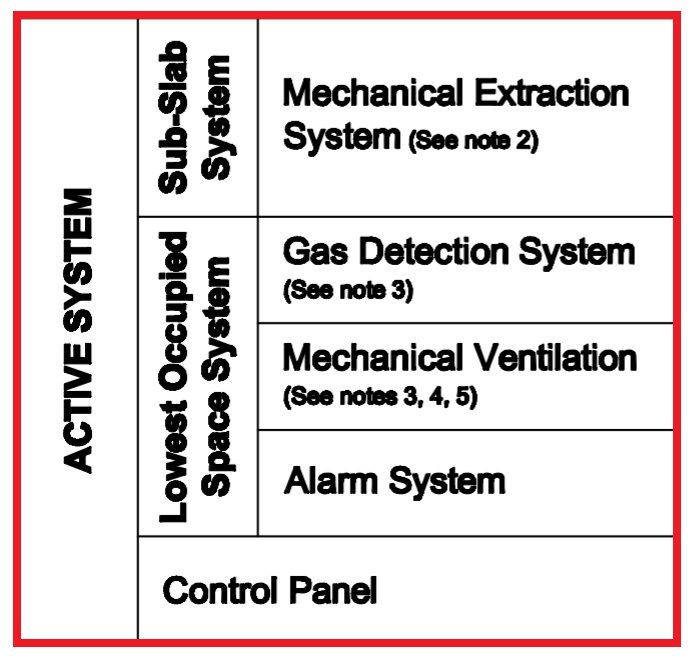
Active Methane Mitigation: Active systems refer to the mechanical and electrical components of a methane mitigation system. In fact, the definition of an Active System is available in Methane Code (Ordinance No. 175790). This is a publication by the Los Angeles Department of Building and Safety (LADBS). Moreover, further descriptions of an active system are available in the LADBS Standard Methane Plans. As per these sources, an Active Methane Mitigation System includes:

  1. Mechanical Extraction System;
  2. Methane Gas Detection System;
  3. Mechanical Ventilation System;
  4. Methane Alarm System; and
  5. Control Panel.
Active Methane Mitigation System Los Angeles LADBS Geo Forward

Similar Posts

  • Lithosphere

    Lithosphere Lithosphere: The lithosphere comprises the Earth’s crust as well as part of the upper mantle. In fact, the lithosphere is approximately 100 kilometers thick and is relatively strong as compared to the underlying asthenosphere.

  • Troposphere

    Troposphere Troposphere: The troposphere of a terrestrial planet is the lowest member of the atmosphere. On Earth, the troposphere starts atop the ground surface and terminates roughly 10 kilometers above mean sea level. In fact, geologists understand that most of the Earth’s water vapor (clouds) exists in the troposphere. And the next member of the…

  • Plutonic Rock (Igneous)

    Plutonic Rock (Igneous) Definition The term “Plutonic” in the field of geology refers to an igneous rock, wherein the magma had originally cooled, solidified, and crystalized underground. A plutonic rock is generally coarsely crystalline (phaneritic) and is formed during a massive geologic intrusion of magma. In fact, outcropping (or daylighting) plutonic rocks are geologic features…

  • Hydraulic Head

    Hydraulic Head Hydrualic Head: In the field of hydrogeology, hydrualic Head is a measure of the potential energy of a fluid at any given point in a hydraulic system. It explains the potential energy driving fluid flow by summing the elevation of the fluid and the pressure it exerts.