Dry Density (ρd)

Dry Density (ρd)

“Dry Density” (ρd) is a value that represents the density of soil when it is completely dry. To illustrate, it equates to (“bulk density” / 1) + “water content.” This is a common geotechnical engineering laboratory procedure.

Dry Density Formula

Dry Density = [(Bulk Density ÷ 1) + (Water Content)]

Similar Posts

  • Fault Scarp

    Fault Scarp Fault Scarp: In the field of geology, a dip-slip fault scarp is a steep slope that is formed directly by fault movement. It occurs along the line of a normal fault, reverse fault, or transform fault. A fault scarp represents the planer surface of the fault before erosion and weathering modify it.

  • Engineering Geology & Geological Engineering

    Engineering Geology or Geological Engineering Engineering Geology: Engineering geology is also referred to as “geological engineering,” and is a branch of geology that relates to the study of earth materials and processes, that are juxtaposed to proposed structures such as buildings, retaining walls, dams, roads, pipelines, and more. Whereby geologists assess any potential levels of…

  • Liquid Limit (LL)

    Liquid Limit (LL) “Liquid Limit (LL)” in the field of geological engineering, refers to the upper limit of the “plastic state.” This is a separation of the plastic phase and viscous liquid phase when measuring soil consistency. Mathematically, it is the water content (basing on the percent of dry weight), at which two sections of…

  • Methane Alarm System

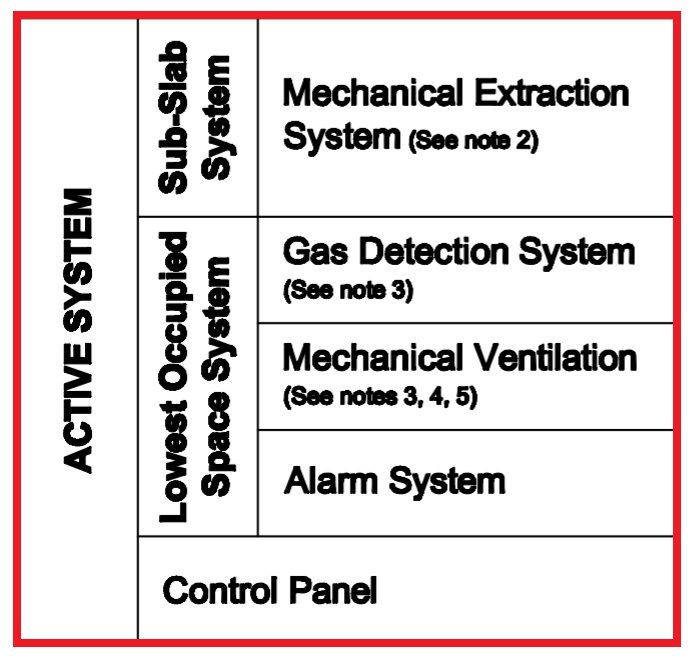
    Methane Alarm System Methane Alarm System: As per the Los Angeles Department of Building and Safety (LADBS) Methane Code, Ordinance Number 175790, a methane alarm system is part of an active methane mitigation plan. A methane alarm system is a group of interacting components and circuits that synchronize to monitor and annunciate the status of…