Underground Storage Tank (UST)

Underground Storage Tank (UST)

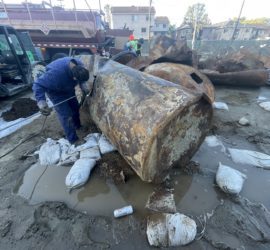
Underground Storage Tank (UST): An underground storage tank (UST) is a confined container occupying any volume of space within the subsurface, for the purposes of storing liquid. Underground tanks typically support commercial and residential services and have filling ports, ventilation pipes, and connecting product pipelines. Underground storage tanks (USTs) come in different sizes and are made with various materials (for example- fiberglass, steel, plastic, polymer, or combinations of these in the form of double walling).
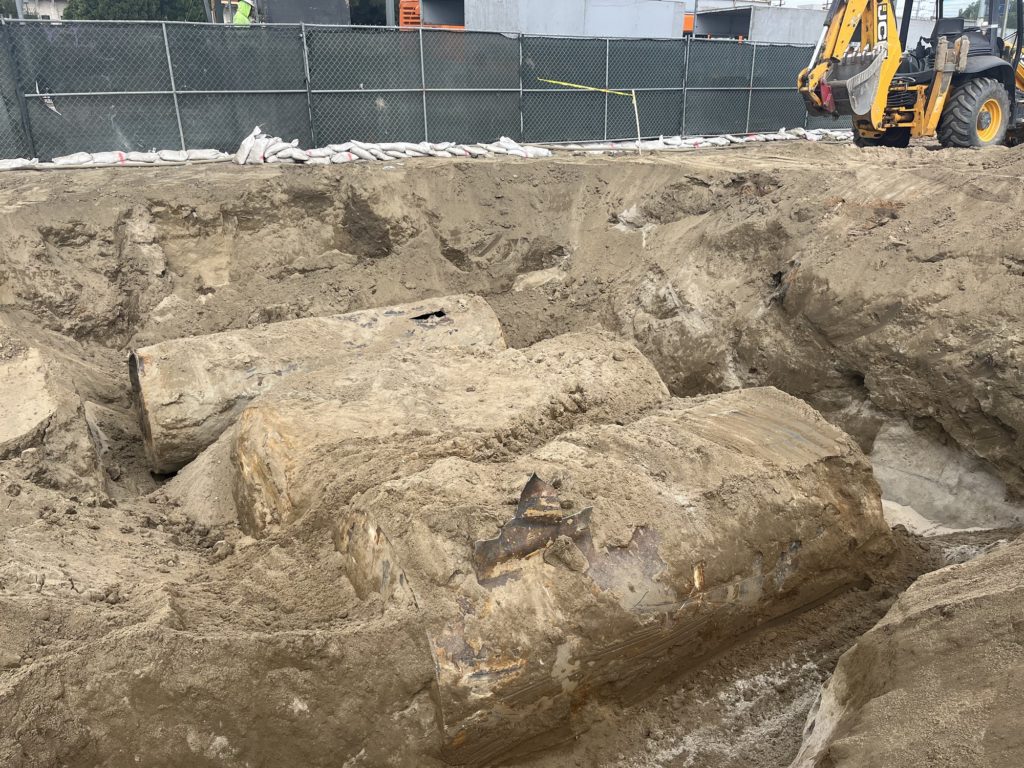
Underground Storage Tank Abandonment & Removal Process - Geo Forward
Underground Storage Tank Abandonment & Removal Process – Photo by Geo Forward

Environmental Conditions of Underground Storage Tanks

Commonly, USTs are used to contain hazardous liquids, such as gasoline, diesel, jet fuel, waste oil, heating oil, etc. As a result, underground tank contamination is a recognized environmental condition. And the underground storage tank removal process entails mandatory environmental compliance. Moreover, modern environmental laws require certain facilities to maintain leak detection systems, vacuum and pressure sensors, and subsurface secondary containment units with USTs to prevent UST soil pollution.

Also See:

Similar Posts

  • Consistency

    Consistency The term “Consistency” in the fields of engineering geology and geotechnical engineering means the degree of adhesion between soil particles within a sample, that are observed to resist deformation or rupture.

  • Dry Density (ρd)

    Dry Density (ρd) “Dry Density” (ρd) is a value that represents the density of soil when it is completely dry. To illustrate, it equates to (“bulk density” / 1) + “water content.” This is a common geotechnical engineering laboratory procedure. Dry Density Formula Dry Density = [(Bulk Density ÷ 1) + (Water Content)]

  • Thrust Fault Definition

    Thrust Fault Thrust Fault: In the field of geology, a thrust fault is a reverse fault in which the fault plane dipping angle is less than 45 degrees. Thrust faults are dip-slip faults, and can also be listric faults. For instance, the fault underlying the western embankment of the historical St. Francis Dam in Saugus,…

  • Hydraulic Head

    Hydraulic Head Hydrualic Head: In the field of hydrogeology, hydrualic Head is a measure of the potential energy of a fluid at any given point in a hydraulic system. It explains the potential energy driving fluid flow by summing the elevation of the fluid and the pressure it exerts.

  • Trench Dam

    Trench Dam Trench Dam: Per the Los Angeles Department of Building and Safety (LADBS) Methane Code, Ordinance Number 175790, a trench dam is part of a methane mitigation system. A trench dam is essentially a subsurface barrier that exists within a furrow or ditch, that is adjacent to the foundation of a building in a…

  • Maximum Soil Screening Levels (MSLs)

    Maximum Soil Screening Levels (MSLs) Maximum Soil Screening Levels (MSLs): MSLs are a list of risk-based hydrocarbon concentrations for soil pollution evaluations, that is developed by the California Regional Water Quality Control Board. These screening levels are based on the Leaking Underground Fuel Tanks (LUFT) Manual, for cleaning up soil contamination from leaking USTs. However, MSLs…