
Vapor Intrusion
Vapor Intrusion occurs when harmful soil contamination changes phase from liquid to vapor underground and moves upward through geologic layers and building foundations, accumulating within indoor air.
Vapor Intrusion occurs when harmful soil contamination changes phase from liquid to vapor underground and moves upward through geologic layers and building foundations, accumulating within indoor air.

Volcanic Rock (Igneous) Definition A “Volcanic Rock” is an igneous rock that is finely crystalline and glassy (or aphanitic). To illustrate, volcanic rocks result from volcanic action at the earth’s surface. Typically, this also includes igneous intrusions that are “near-surface,” which may otherwise be considered plutonic. This action results in a final rock that is…
Feldspars Feldspars: In the field of geology, and the branch of mineralogy, feldspars are a mineral group, that is the most common amongst the earth’s crust. In fact, there are two types of feldspars: plagioclase feldspar and orthoclase feldspar.
Dilatancy “Dilatancy” is the increase in the bulk volume of a soil substance during deformation. Dilatancy is caused by the change from a close-pack structure to an open-pack structure.
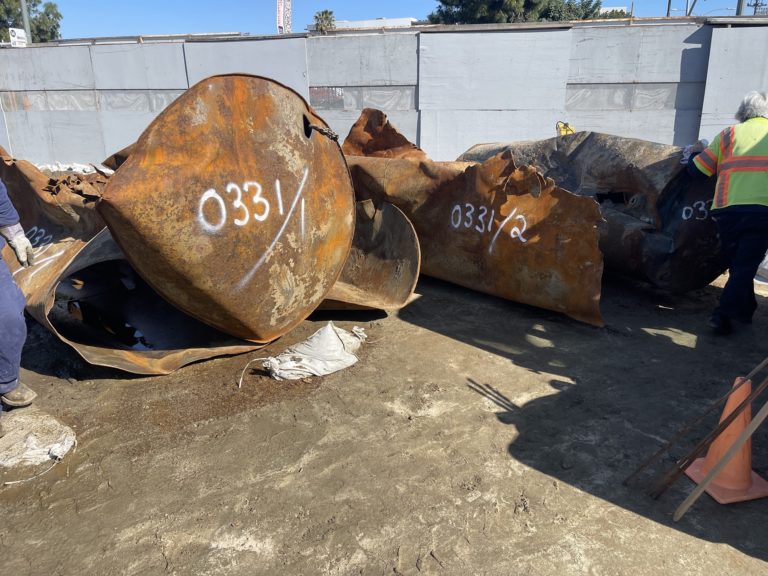
Bowser Underground Gasoline Storage Tank & Storage Outfit Sylvanus Freelove (S.F.) Bowser is credited with inventing the first gasoline pump and storage tank combination in 1885. Originally, he invented the pump to dispense kerosene, but as the popularity of gasoline increased with the rise of the automobile, so too did the application of the Bowser…
Focus (Hypocenter) Focus (Hypocenter): In the seismology branch of geology, a focus, or hypocenter, refers to the specific place where an earthquake rupture originates. The focus, or hypocenter, underlies the epicenter when an earthquake occurs at a dip-slip fault, strike-slip fault, oblique-slip fault, or listric fault. In the event of an earthquake, geologists, and seismologists…
Plutonic Rock (Igneous) Definition The term “Plutonic” in the field of geology refers to an igneous rock, wherein the magma had originally cooled, solidified, and crystalized underground. A plutonic rock is generally coarsely crystalline (phaneritic) and is formed during a massive geologic intrusion of magma. In fact, outcropping (or daylighting) plutonic rocks are geologic features…