Environmental Consultant

Environmental Consultant

Environmental Consultant: An environmental consultant is an expert of any profession or field, who focuses their skills and knowledge towards matters that improve the environment. Environmental consultants are typically scientists with expertise in geology, chemistry, physics, and engineering.

Environmental Consultants Working Towards Environmental Sustainability

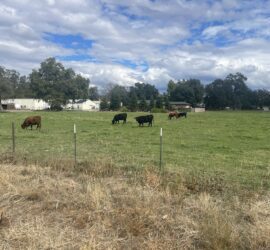
Environmental consultants generally provide professional services that aim towards humanity reaching 100% environmental sustainability. For instance, sustainable agriculture consultants assist farmers with eco-friendly strategies to create and operate a self-sustaining farm that is harmonious with the environment it is situated within.

Environmental Professional in Environmental Geology

In the environmental geology, engineering, and due diligence fields, the All Appropriate Inquiries (AAI) Rule provides qualifications for any practicing environmental consultant, also known as an environmental professional. And in accordance with the Environmental Protection Agency (EPA) and federal cleanup regulations, these qualifications must be met for any environmental consultant to perform Phase 1 Environmental Site Assessments, Phase 2 Environmental Site Assessments, or Transaction Screen Assessments.

Similar Posts

  • Transmissivity

    Transmissivity Transmissivity: In geology and hydrogeology, transmissivity (T) represents the capacity of an aquifer to transmit water of the prevailing kinematic viscosity. Formula T=Kb, where b = saturated thickness of the aquifer. Dimensions are gallons per day per foot (gpd/ft) or feet squared per day (ft^2/day).

  • Unobstructed Opening in Methane Mitigation

    Unobstructed Opening Definition in Methane Mitigation Unobstructed Opening: Per the Los Angeles Department of Building and Safety (LADBS) Methane Code, Ordinance Number 175790, an unobstructed opening is a permanent clearance or gap in the walls, floors, or ceiling of a structure, to allow for direct fresh airflow. In methane mitigation plan applications, this does not…

  • Thrust Fault Definition

    Thrust Fault Thrust Fault: In the field of geology, a thrust fault is a reverse fault in which the fault plane dipping angle is less than 45 degrees. Thrust faults are dip-slip faults, and can also be listric faults. For instance, the fault underlying the western embankment of the historical St. Francis Dam in Saugus,…

  • Normal Fault Definition

    Normal Fault Normal Fault: In the field of geology, a normal fault is a type of dip-slip fault where the hanging wall moves downwards from the footwall. The average dipping angle of a normal fault ranges from 45 to 90 degrees. Normal faults are the opposite of reverse faults. Detachment Fault Detachment Fault: A detachment…

  • Liquid Limit (LL)

    Liquid Limit (LL) “Liquid Limit (LL)” in the field of geological engineering, refers to the upper limit of the “plastic state.” This is a separation of the plastic phase and viscous liquid phase when measuring soil consistency. Mathematically, it is the water content (basing on the percent of dry weight), at which two sections of…

  • Consistency

    Consistency The term “Consistency” in the fields of engineering geology and geotechnical engineering means the degree of adhesion between soil particles within a sample, that are observed to resist deformation or rupture.