Environmental Consultant

Environmental Consultant

Environmental Consultant: An environmental consultant is an expert of any profession or field, who focuses their skills and knowledge towards matters that improve the environment. Environmental consultants are typically scientists with expertise in geology, chemistry, physics, and engineering.

Environmental Consultants Working Towards Environmental Sustainability

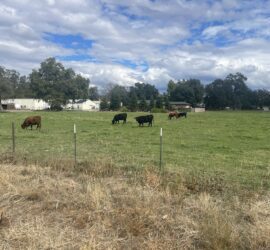
Environmental consultants generally provide professional services that aim towards humanity reaching 100% environmental sustainability. For instance, sustainable agriculture consultants assist farmers with eco-friendly strategies to create and operate a self-sustaining farm that is harmonious with the environment it is situated within.

Environmental Professional in Environmental Geology

In the environmental geology, engineering, and due diligence fields, the All Appropriate Inquiries (AAI) Rule provides qualifications for any practicing environmental consultant, also known as an environmental professional. And in accordance with the Environmental Protection Agency (EPA) and federal cleanup regulations, these qualifications must be met for any environmental consultant to perform Phase 1 Environmental Site Assessments, Phase 2 Environmental Site Assessments, or Transaction Screen Assessments.

Similar Posts

  • Volcanology

    Volcanology Volcanology: Volcanology is a branch of geology that focuses on the study of volcanos. In volcanology, geologists conduct field and laboratory investigations to learn about continental, coastal, and submarine volcanic activities. In fact, volcanology ties into many other branches of geology. For instance, a volcanologist may study the geochemistry of igneous rocks, such as…

  • Natural Gas

    Natural Gas Natural Gas: In geology, natural gas means combustible hydrocarbon gas that forms by natural geological or biological processes. To illustrate, natural gas that forms by geological processes is the thermal decomposition of buried organic materials. Whereas natural gas that forms via biological processes entail the microbial decomposition of buried organic material. Natural gas…

  • Well Graded

    Well Graded Soil Well Graded: In the soil classification process of geology, well graded soil represents a sedimentary soil sample that fully displays all of the possible grain sizes for that soil classification, in accordance with the Unified Soil Classification System (USCS). For example, a well graded sand (SW) comprises fine, medium, and coarse grains…

  • Liquefaction

    Liquefaction Liquefaction: Liquefaction is the process by which there is: (1) a sudden and significant decrease of shear resistance in a soil sample (cohesion-less); (2) a sudden (but temporary) increase of the pore-water pressure of a substance; and (3) a solid mass of soil that is transformed into a fluid state mass. In the event…

  • Environmental Geology

    Environmental Geology Environmental Geology: (en·vi·ron·men·tal ge·ol·o·gy) a branch of geology that relates to the impact of human activity on Earth, and the pollution of geologic formations, reserves, and resources. Common focus points of environmental geology are contaminated soil, groundwater aquifers, lakes, rivers, and the ocean. Professional geologists assess and remediate contamination plumes in all media,…

  • Contact Metamorphism

    Contact Metamorphism Contact Metamorphism – Metamorphism is associated with the intrusion of an igneous mass. Metamorphic changes are caused principally by heat, but also by magma composition and deformation related to the intrusion. Pressures are relatively low (<3000 bars) while temperatures range from 200°C to 1000°C.