
A facility condition assessment (FCA), also called a building condition assessment (BCA), is an inspection of a building’s systems that tells an owner what condition each system is in, how long it should last and what it will cost to repair or replace over the coming years. Geo Forward performs FCAs for owners, property managers, schools, institutions and public agencies, using the same field process as our property condition assessments.
Facility Condition Assessment vs. Property Condition Assessment
The fieldwork is very similar. The difference is the purpose and the time horizon.
| Property Condition Assessment | Facility Condition Assessment | |
|---|---|---|
| Typical client | Buyer, borrower or lender | Owner, facility manager, school district, agency |
| Purpose | Due diligence for a purchase or loan | Capital planning, budgeting and maintenance |
| Time horizon | Immediate and short-term repairs, plus reserves over the loan term | Long-range capital needs, often 10 years or more |
| Level of detail | Baseline visual survey (ASTM E2018-24) | System-by-system inventory, remaining useful life and replacement costs |
| Typical output | Property condition report with cost opinions | Capital plan, deficiency list and a facility condition index (FCI) |
ASTM has noted that its PCA guide suits transactional uses but is less suited to asset management and capital planning, and it has started work on a separate guide for facility condition assessments.
What We Assess
- Site: paving, parking, sidewalks, drainage, landscaping, site lighting and utilities.
- Structure and envelope: foundations, framing, exterior walls, windows, doors and signs of movement or water intrusion.
- Roofing: roof covering, flashing, drains, parapets and rooftop equipment supports.
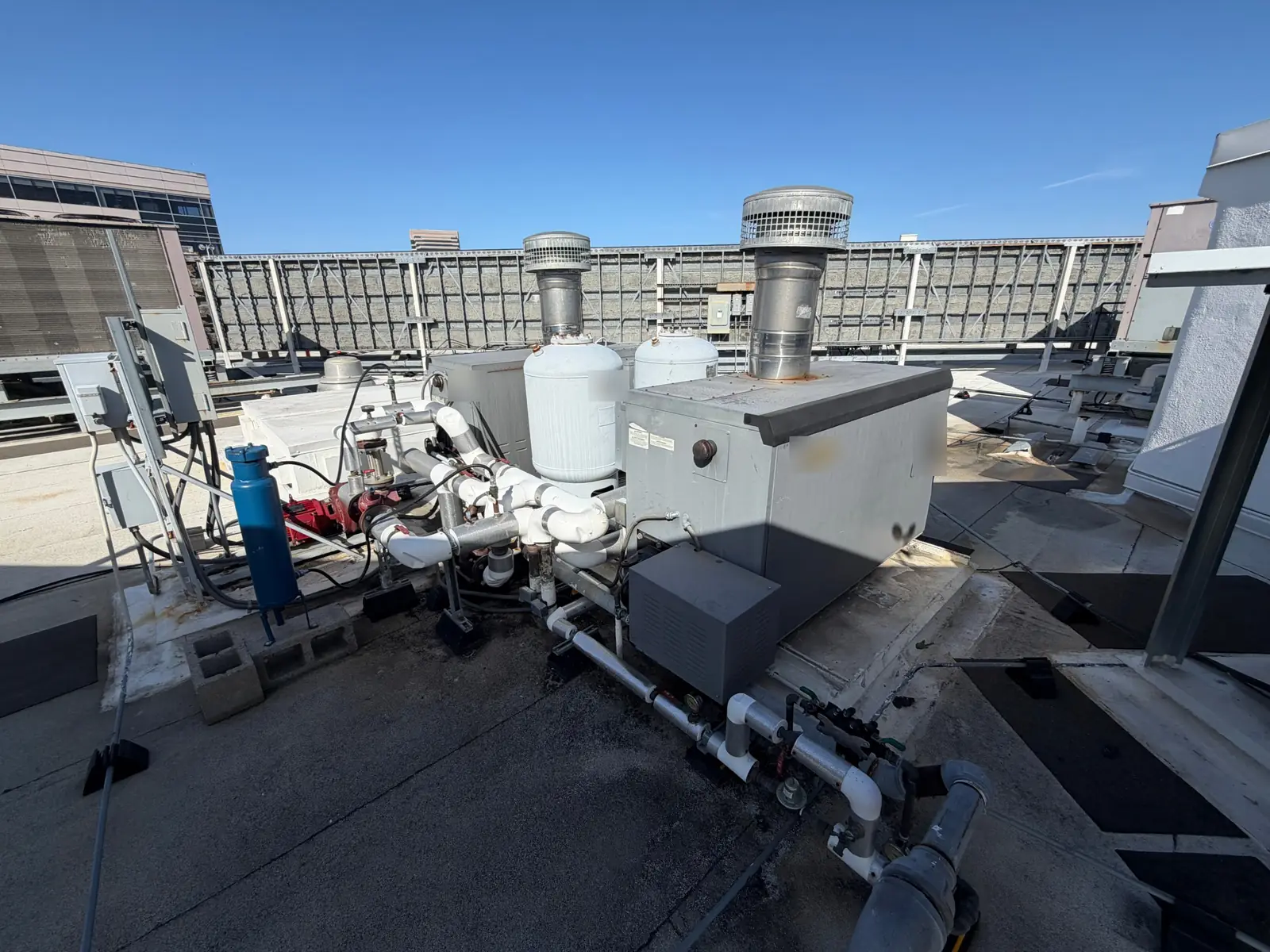
- Mechanical (HVAC): rooftop units, boilers, chillers, air handlers, controls and ductwork, with age and expected remaining life.
- Plumbing: domestic water, water heaters, piping, fixtures and sewer laterals.
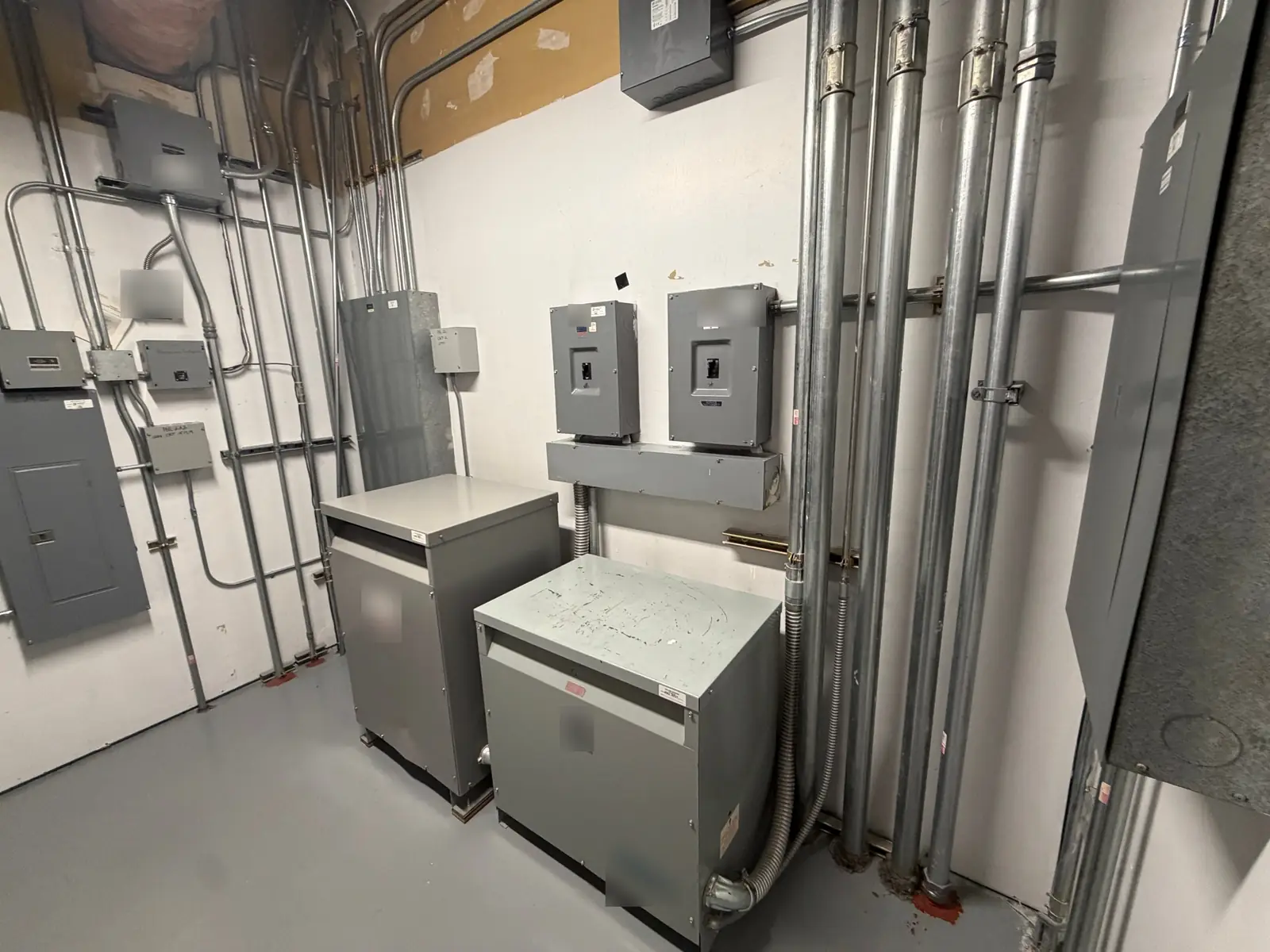
- Electrical: service, switchgear, transformers, panelboards, lighting and emergency power.
- Fire and life safety: fire alarm, sprinkler risers, extinguishers and exit signage.
- Vertical transportation: elevators and lifts, including certificate status.
- Interiors and accessibility: finishes and readily observable ADA barriers.
The Facility Condition Index (FCI)
Many FCAs report a facility condition index: the cost of deferred maintenance and repair needs divided by the current replacement value of the building. Federal agencies and universities use the FCI to compare buildings and track condition over time. A lower FCI means fewer repair needs relative to the building’s value.
Our FCA Process
- Scoping: we agree on the buildings, systems, time horizon and cost format you need for your budget cycle.
- Document review: drawings, maintenance records, equipment lists, service contracts and prior assessments.
- Field assessment: a walk-through of each building and system, with photos and equipment data.
- Interviews: facility and maintenance staff describe known problems, recent work and planned projects.
- Cost modeling: repair and replacement costs by system and year, with priorities.
- Report: deficiency list, capital plan and FCI, in a format you can update.
See our PCA checklist and process for how a single building is walked.
Who Uses Facility and Building Condition Assessments
- Owners and REITs planning capital budgets across a portfolio.
- Property managers preparing for a sale, refinance or lease renewal.
- Schools, colleges and public agencies building long-range facility plans.
- Associations and owners setting reserve budgets for building systems.
Pair an FCA With Environmental and Geotechnical Work
Because Geo Forward is an environmental engineering and geology firm, we can add a Phase 1 ESA, asbestos survey, indoor air quality testing or methane testing to the same project, with one team and one schedule.
Need a facility or building condition assessment? Call (888) 930-6604 (Mon–Fri, 8 am–5 pm PT) or request a proposal.
Facility Condition Assessment FAQs
What is a facility condition assessment?
A facility condition assessment (FCA) is an inspection of a building’s systems that reports their condition, expected remaining life and the cost to repair or replace them over time, for capital planning and budgeting.
Is a building condition assessment the same as a facility condition assessment?
Yes. The terms are used interchangeably for an owner-focused assessment of building systems and long-term capital needs.
How is an FCA different from a property condition assessment?
A PCA supports a purchase or loan and focuses on immediate and short-term repairs. An FCA supports an owner’s long-range capital plan and usually goes into more detail on each system.
What is a facility condition index?
The facility condition index (FCI) is the cost of deferred maintenance and repair needs divided by the current replacement value of a building. Lower values indicate better condition.
How much does a facility condition assessment cost?
FCA fees depend on the number and size of buildings, the systems included and the planning horizon. Call (888) 930-6604 for a fixed-fee proposal.
Sources:
National Library of Medicine (NIH): facility condition index definition
USDA Forest Service: Facility value and condition measures
University of North Carolina: Facilities Condition Assessment Program
U.S. Department of Justice: ADA Standards for Accessible Design