Leaking Underground Storage Tank (LUST)

Leaking Underground Storage Tank (UST)

Leaking Underground Storage Tank (LUST): A leaking underground storage tank (LUST) is a known case of hazardous liquid materials released into the environment, from within an underground storage tank (UST) source. The term “LUST” commonly applies to gasoline station soil contamination cases overseen by environmental regulatory agencies.
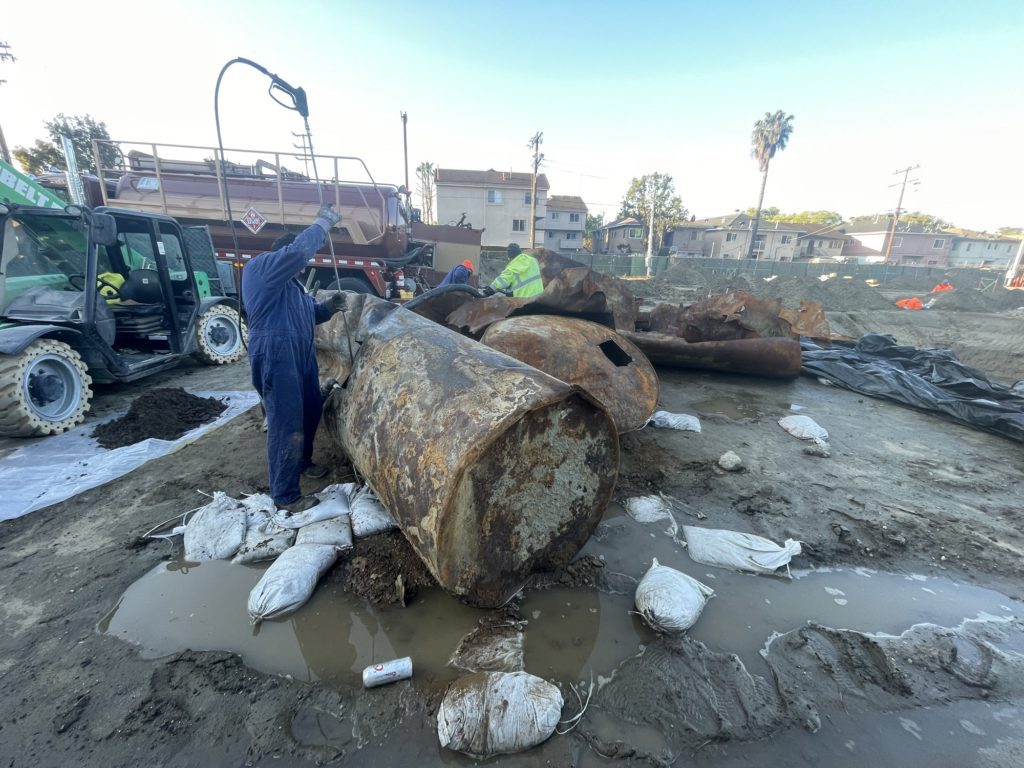
Example of Leaking Underground Storage Tank Project

Also See:

Similar Posts

  • Environmental Consultant

    Environmental Consultant Environmental Consultant: An environmental consultant is an expert of any profession or field, who focuses their skills and knowledge towards matters that improve the environment. Environmental consultants are typically scientists with expertise in geology, chemistry, physics, and engineering. Environmental Consultants Working Towards Environmental Sustainability Environmental consultants generally provide professional services that aim towards…

  • Facies

    Facies Facies: In the field of geology, the term “facies” represents a mappable, areally restricted part of a rock body that has different fossils or lithology from other contiguous beds deposited at the same time.

  • Reverse Fault Definition

    Reverse Fault Reverse Fault: In the field of geology, a reverse fault is a dip-slip fault in which the hanging wall moves upwards, relative to the footwall. The average dipping angle of a reverse fault ranges from 45 to 90 degrees. However, if less than 45 degrees, it becomes a “thrust fault.” Reverse faults are…

  • Hydrogen Sulfide Soil Gas

    Hydrogen Sulfide Soil Gas (In Natural Gas) Hydrogen Sulfide: Hydrogen sulfide (H2S) soil gas geologically occurs upon the thermal and microbial decomposition of subsurface organic material deposits. It is typically identifiable in biogenic and petrogenic natural gas sources, along with higher concentrations of methane soil gas. Additionally, nitrogen, oxygen, hydrogen, ethane, and isobutane exist within…