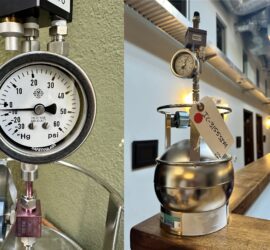
Mechanical Extraction System

Mechanical Extraction System

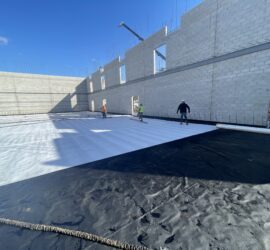
Mechanical Extraction System: Per the Los Angeles Department of Building and Safety (LADBS) Methane Code, Ordinance Number 175790, a Mechanical Extraction System is one of the Active Methane Mitigation criteria for methane mitigation systems in buffer zones and methane zones.  A mechanical extraction system uses machines that remove methane gas from below the impervious membrane. And this includes the use of fans, blowers, or other powered devices that are above and below the methane barrier itself.

Similar Posts

  • Rotational Slide (Slump)

    Rotational Slide (Slump) Definition Rotational Slide (Slump):  A rotational slide is a type of landslide movement that occurs in a turning moment, about a pivot point that is above the center of gravity. This is typically due to an increased normal force on a slope, as well as a reduced cohesion factor of the soil…

  • Total Petroleum Hydrocarbons (TPH)

    Total Petroleum Hydrocarbons (TPH) Total Petroleum Hydrocarbons (TPH): The term “Total Petroleum Hydrocarbons” represents the complete carbon chain of hydrocarbon compounds that originate from petroleum. In general there are three ranges of TPH: Gasoline Range Total Petroleum Hydrocarbons (TPH-g); Diesel Range Total Petroleum Hydrocarbons (TPH-d); and Oil Range Total Petroleum Hydrocarbons (TPH-o). Gasoline range TPH represents the…

  • Underground Storage Tank (UST)

    Underground Storage Tank (UST) Underground Storage Tank (UST): An underground storage tank (UST) is a confined container occupying any volume of space within the subsurface, for the purposes of storing liquid. Underground tanks typically support commercial and residential services and have filling ports, ventilation pipes, and connecting product pipelines. Underground storage tanks (USTs) come in different…

  • Focus (Hypocenter)

    Focus (Hypocenter) Focus (Hypocenter): In the seismology branch of geology, a focus, or hypocenter, refers to the specific place where an earthquake rupture originates. The focus, or hypocenter, underlies the epicenter when an earthquake occurs at a dip-slip fault, strike-slip fault, oblique-slip fault, or listric fault. In the event of an earthquake, geologists, and seismologists…

  • Concrete Gravity Dam

    What is a Concrete Gravity Dam? A Concrete Gravity Dam is also known as “Gravity Arch Dam,” and is a freshwater-retaining concrete structure that has a wider footing (base) than the top-section. The purpose of a Concrete Gravity Dam is to maintain a low center of gravity, in order to avoid collapsing in the event…