
Perched Groundwater
Perched Groundwater – In geology, “perched groundwater” refers to unconfined groundwater which separates from an underlying body of groundwater by an unsaturated zone or vadose zone.
Perched Groundwater – In geology, “perched groundwater” refers to unconfined groundwater which separates from an underlying body of groundwater by an unsaturated zone or vadose zone.

Well Log (Boring Log) Well Log: A geological well log (or boring log) is a detailed record of subsurface materials encountered during a drilling project. Boring logs, or well logs, are written by a geologist, and describe the physical subsurface characteristics and lithological units encountered during well-plotting. Well logs include information about depth, different formations,…
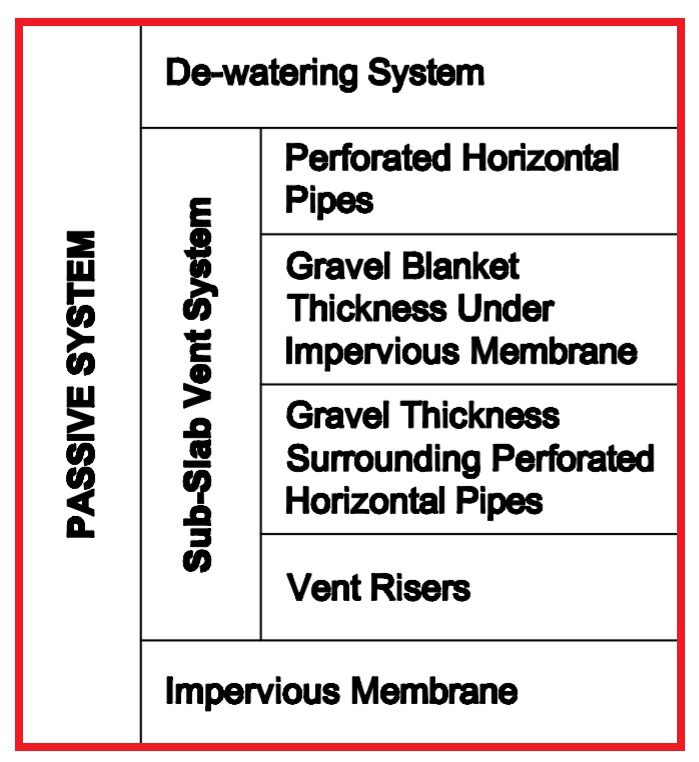
Passive Methane Mitigation Passive Methane Mitigation: Passive systems refer to the non-mechanical and non-electric components of the methane mitigation process. These components remove the vapor intrusion risks of methane soil gas migration into buildings atop Los Angeles Methane Zones and Methane Buffer Zones. In fact, methane testing results typically indicate the necessity for a passive…
Twinning Definition Twinning is the observed intergrowth of multiple crystals in a symmetrical fashion. This term applies to the examination of rock thin sections, in the field of optical mineralogy.

Normal Fault Normal Fault: In the field of geology, a normal fault is a type of dip-slip fault where the hanging wall moves downwards from the footwall. The average dipping angle of a normal fault ranges from 45 to 90 degrees. Normal faults are the opposite of reverse faults. Detachment Fault Detachment Fault: A detachment…
Gap-Graded The term “Gap-Graded” is used by geologists, engineers, and soil scientists in the geotechnical engineering field to describe the gradation of a soil sample, specifically when some particle sizes are missing. Aside from being “gap graded,” a soil sample can be described as “well-graded” (also referred to as poorly sorted), or “poorly graded” (or…
Epicenter Epicenter: In the seismology branch of geology, an epicenter of an earthquake is the point on Earth’s surface that is directly above the focus (or hypocenter). It is the ground surface location overlying where an earthquake rupture originates within a dip-slip fault or strike-slip fault. Shortly after an earthquake, United States Geological Survey (USGS)…