
Geo Forward manages underground storage tank (UST) removal and closure projects in Houston and across Texas from our office at 1001 Texas Avenue in Downtown Houston. A Texas Licensed Professional Geologist plans each project around the Texas Commission on Environmental Quality (TCEQ) rules and handles the soil sampling, release determination and closure documentation, from the 30-day construction notice to the final report. Call (888) 930-6604.
Texas UST Removal Rules (TCEQ)
In Texas, regulated petroleum USTs fall under the TCEQ Petroleum Storage Tank program and Title 30, Texas Administrative Code, Chapter 334. When a tank is permanently taken out of service, 30 TAC 334.55 gives the owner three options:
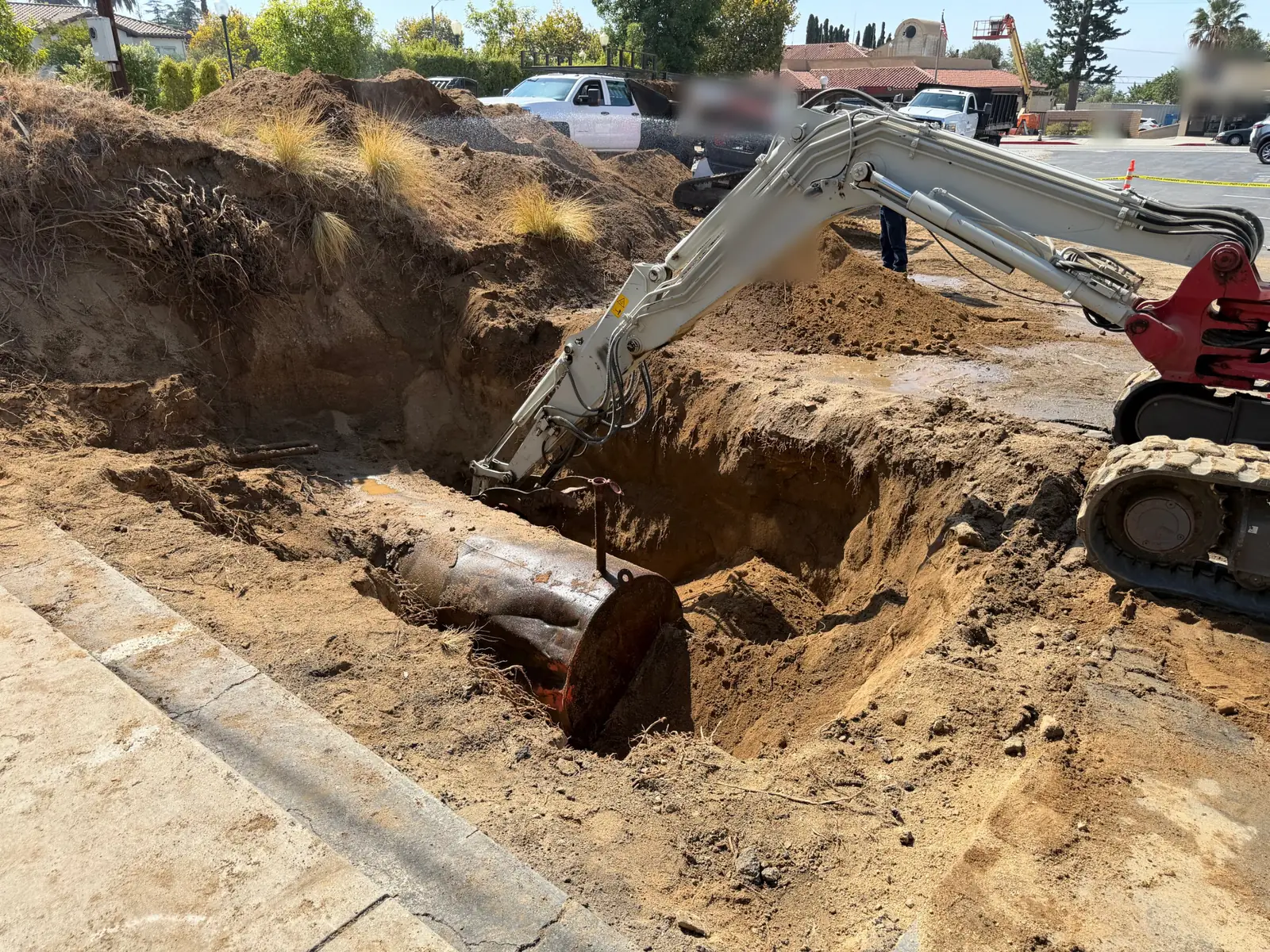
- Removal: the tank is pulled out of the ground.
- Abandonment in place: the tank is cleaned and filled with an inert solid, usually when it sits under a building or another permanent structure.
- Change in service: the tank is converted to store a substance that is not regulated.
Whichever option you choose, Texas requires a demonstration that the tank system did not release its contents. In practice that means soil (and sometimes groundwater) samples collected from the tank pit and piping runs, analyzed by a laboratory and documented in a site assessment. That sampling and reporting is the part a geologist leads.
Notifications and licensing
- 30-day construction notice: TCEQ must receive an AST and UST Construction Notification (Form TCEQ-00495, or the same notice through STEERS) at least 30 days before the removal or abandonment begins. The notice is valid for a limited time, so the schedule matters.
- 24 to 72 hour notice: the TCEQ regional office must be told shortly before work starts.
- Local approval: TCEQ guidance also calls for notifying, and where required getting approval from, the local government and fire marshal.
- Licensed contractor: Texas requires UST removals to be performed by a TCEQ-registered UST contractor, with a TCEQ-licensed on-site supervisor present at the critical junctures of the work.
- Records: the owner must keep a permanent record of the removal, including the tank location, removal date, substance stored, how the tank was prepared, who did the work and the site assessment results.
Houston, Harris County and Other Texas Cities
Local rules sit on top of the state rules. Inside Houston city limits, fire permits run through the Houston Fire Department permit office at the Houston Permitting Center. Many surrounding cities, such as Tomball, have their own fuel tank installation and removal permit and inspection. Before any work is scheduled, we confirm which fire marshal and permit office has jurisdiction over the property.
In the San Antonio and Austin areas, sites in Medina, Bexar, Comal, Kinney, Uvalde, Hays, Travis and Williamson counties can face added requirements that protect the Edwards and Trinity aquifers.
Are Heating Oil and Farm Tanks Regulated in Texas?
Several tank types are exempt from the TCEQ UST rules under 30 TAC 334.3, including tanks that store heating oil used on the premises and farm or residential tanks of 1,100 gallons or less holding motor fuel for noncommercial use. Exempt does not mean harmless. An old leaking tank can still contaminate soil, show up in a buyer’s Phase 1 Environmental Site Assessment, and stall a sale or a loan. Most owners remove these tanks and sample the soil anyway, so they have documentation to show a lender or buyer. See oil tank removal for residential tanks and oil tank sweep if you are not sure a tank is there.
Small in-ground hydraulic lifts are also exempt in Texas when they hold less than 100 gallons of hydraulic oil, but they are often removed for the same reasons. See hydraulic lift removal.
Our Texas UST Removal Process
- Records review and site walk: TCEQ registration records, tank size and contents, piping, dispensers and nearby structures or property lines. If tank locations are uncertain, a geophysical survey finds them first.
- Notifications and permits: the TCEQ 30-day construction notice, the regional office notice and the local fire marshal or city permit.
- Tank preparation: remaining product and sludge are pumped out, and the tank is cleaned and made safe before it is opened or lifted.
- Removal or abandonment in place: excavation and removal of the tank and piping, or filling the tank in place when removal is not practical.
- Soil and groundwater sampling: samples from the tank pit and piping runs, sent to a laboratory.
- Disposal and backfill: the tank, liquids and any impacted soil go to permitted facilities, with manifests kept for your records.
- Site assessment and closure documentation: a report reviewed by a Licensed Professional Geologist for TCEQ, your lender or a buyer.
What If Contamination Is Found?
If sampling suggests the tank leaked, TCEQ expects the suspected release to be reported within 24 hours and investigated within 30 days. A confirmed release moves into assessment and, if needed, corrective action. Our geologists can carry the project into a Phase 2 investigation and remediation without changing teams.
How Much Does UST Removal Cost in Texas?
Commercial fuel tank removal typically runs $35,000 to $100,000. Residential heating oil tank removal typically runs $15,000 to $20,000. The price depends on tank size and number, what the tank held, how much contamination is found, and how close the tank sits to foundations and property lines. See underground storage tank removal cost for a full breakdown.
Houston Office
Geo Forward, Inc.
1001 Texas Ave, Ste 1400
Houston, TX 77002
Phone: (888) 930-6604
Mon–Fri, 8 am–5 pm
We also handle environmental engineering in Houston, including Phase 1 and Phase 2 environmental site assessments.
Texas UST Removal FAQs
Who regulates underground storage tank removal in Texas?
The Texas Commission on Environmental Quality (TCEQ) through its Petroleum Storage Tank program and 30 TAC Chapter 334. Local fire marshals and city permit offices may also require permits and inspections.
How much notice does TCEQ need before a UST is removed?
At least 30 days, using a construction notification (Form TCEQ-00495 or STEERS), plus a notice to the TCEQ regional office 24 to 72 hours before work starts.
Who can remove a UST in Texas?
Texas requires a TCEQ-registered UST contractor, with a TCEQ-licensed on-site supervisor present at the critical junctures of the removal.
Can a UST be left in the ground in Texas?
Yes. Abandonment in place is allowed when the tank is properly cleaned and filled with an inert solid, which is common when a tank sits under a building. The same release demonstration still applies.
Do I have to remove a heating oil tank in Texas?
Heating oil tanks used on the premises are exempt from the TCEQ UST rules, but many owners remove them and sample the soil before selling or refinancing, because a leaking tank can still create liability.
How much does UST removal cost in Houston?
Commercial fuel tanks typically cost $35,000 to $100,000 and home heating oil tanks $15,000 to $20,000, depending on size, number of tanks, contents, contamination and site access.
See our nationwide underground storage tank removal services or call (888) 930-6604.
Sources:
TCEQ: Installing, Updating, or Removing Petroleum Storage Tanks
TCEQ RG-475m: Permanently Removing Petroleum Storage Tanks from Service
TCEQ RG-475c: Licensed Contractors for Underground Storage Tanks
TCEQ: AST and UST Construction Notification
TCEQ: Exclusions and Exemptions from Petroleum Storage Tank Rules
TCEQ: Temporarily Out of Service Tanks (release reporting)
30 TAC 334.55: Permanent Removal from Service (Cornell LII)
30 TAC 334.6: Construction Notification (Cornell LII)
30 TAC 334.3: Exemptions for USTs (Cornell LII)
Houston Fire Department: Forms and Permits
U.S. EPA: Underground Storage Tanks