Leaking Underground Storage Tank (LUST)

Leaking Underground Storage Tank (UST)

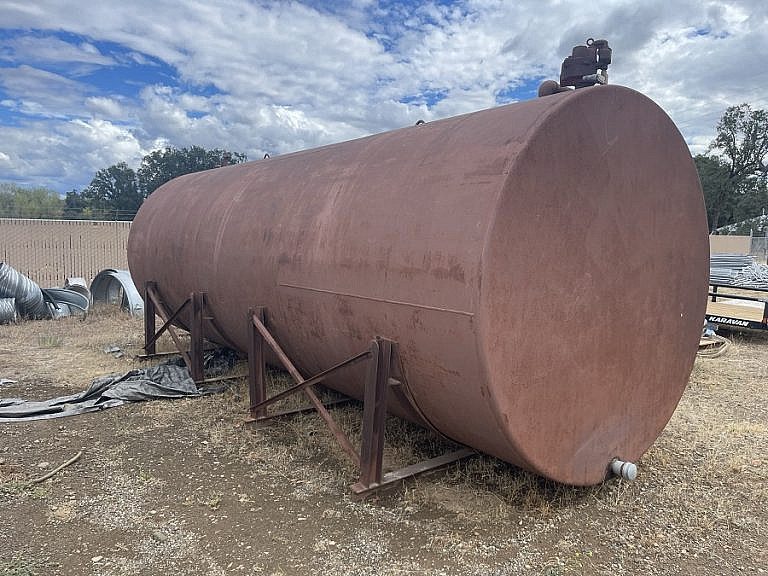
Leaking Underground Storage Tank (LUST): A leaking underground storage tank (LUST) is a known case of hazardous liquid materials released into the environment, from within an underground storage tank (UST) source. The term “LUST” commonly applies to gasoline station soil contamination cases overseen by environmental regulatory agencies.
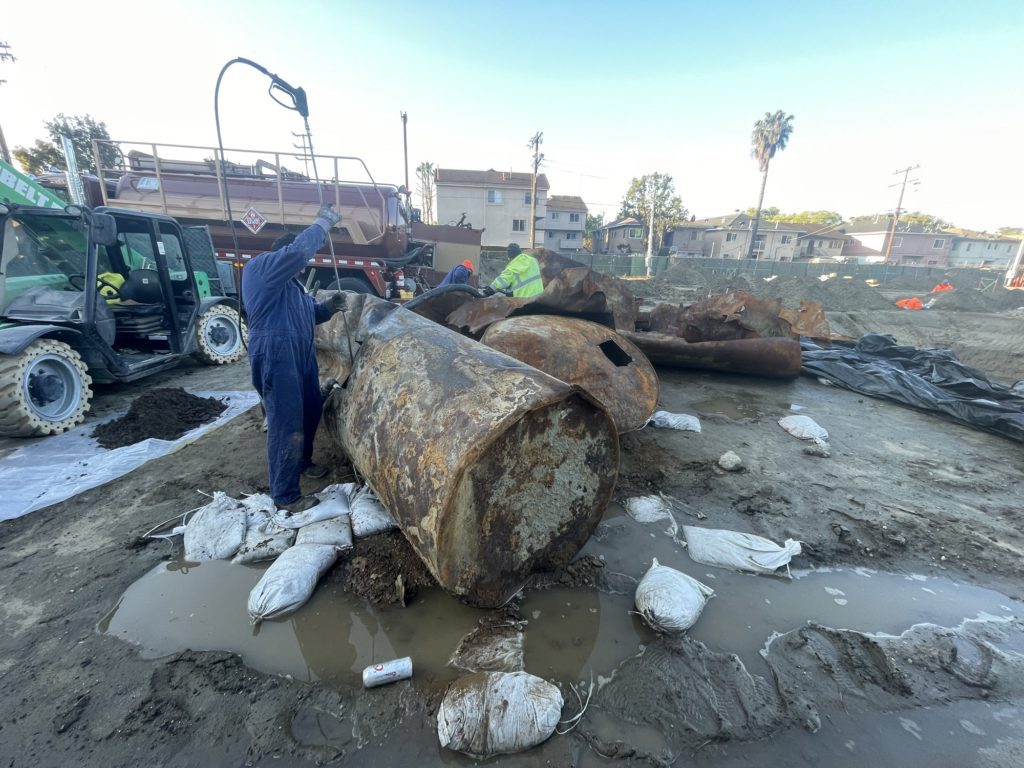
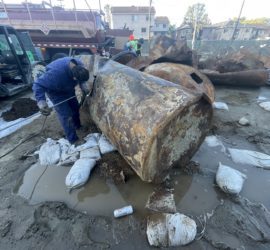
Example of Leaking Underground Storage Tank Project

Also See:

Similar Posts

  • Underground Hydraulic Lift Removal Process

    Underground Hydraulic Lift Removal The underground hydraulic lift removal process entails excavating lift system hoists and corresponding storage tanks and remediating the contamination to maintain environmental compliance. A hydraulic lift removal contractor starts by obtaining multiple permits and coordinating EPA waste profiles for legal transport and disposal. Afterward, the remediation contractor works with a geologist to ensure…

  • Soil Compaction Testing and Soil Density Testing

    Soil Compaction Testing or Soil Density Testing Soil compaction testing, or soil density testing, is the process by which the density property of a soil mass is increased in the field by various means, and monitored by a professional geologist in accordance with local building department specifications. During the placement of engineered backfill material, density…

  • Reverse Fault Definition

    Reverse Fault Reverse Fault: In the field of geology, a reverse fault is a dip-slip fault in which the hanging wall moves upwards, relative to the footwall. The average dipping angle of a reverse fault ranges from 45 to 90 degrees. However, if less than 45 degrees, it becomes a “thrust fault.” Reverse faults are…

  • Atmosphere

    Atmosphere Atmosphere: The atmosphere of a terrestrial planet is an outermost series of layers that comprises gaseous phase elements within part of the planet’s gravitational field. For instance, the Earth’s atmosphere exists in the air spaces that are approximately 95 kilometers above the ground surface. And within it, are the troposphere, stratosphere, mesosphere, and thermosphere….

  • Tsunami

    Tsunami Tsunami: In the seismology branch of geology, a tsunami is an oceanic wave (gravitational) that is produced by seismic activity on the ocean floor. Common triggers of tsunamis are large-scale short­ duration earthquakes, volcanic eruptions, or other submarine earth movements such as subsidence and slope failure.

  • Natural Gas

    Natural Gas Natural Gas: In geology, natural gas means combustible hydrocarbon gas that forms by natural geological or biological processes. To illustrate, natural gas that forms by geological processes is the thermal decomposition of buried organic materials. Whereas natural gas that forms via biological processes entail the microbial decomposition of buried organic material. Natural gas…