Trench Dam

Trench Dam

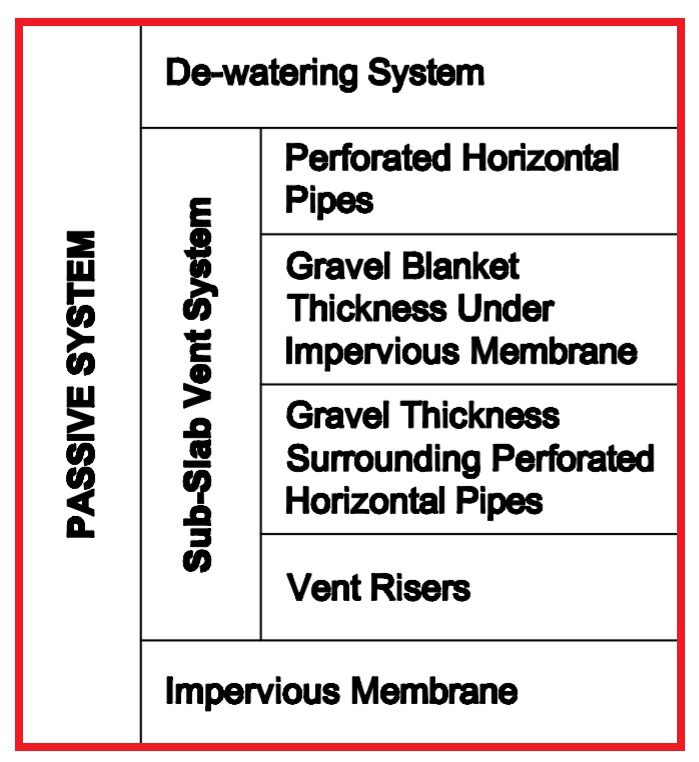
Trench Dam: Per the Los Angeles Department of Building and Safety (LADBS) Methane Code, Ordinance Number 175790, a trench dam is part of a methane mitigation system. A trench dam is essentially a subsurface barrier that exists within a furrow or ditch, that is adjacent to the foundation of a building in a methane zone or methane buffer zone. And the purpose of a trench dam is to prevent the migration of methane soil gas through any permeations of a building foundation.
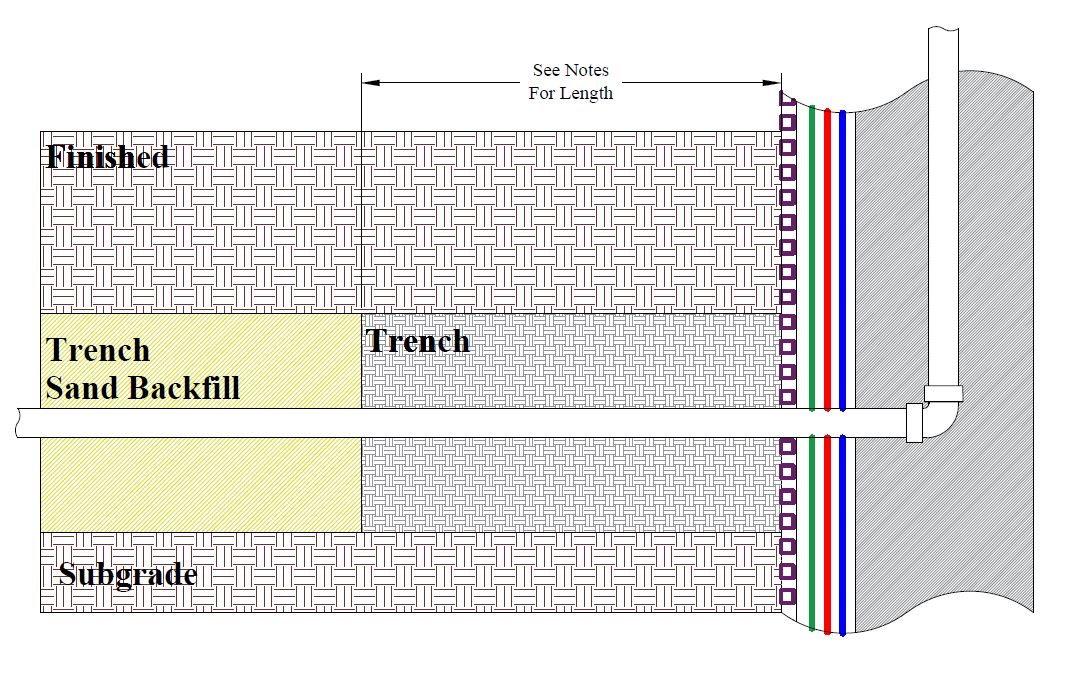

Trench Dam of Methane Mitigation System by Geo Forward

Similar Posts

  • Consolidation

    Consolidation “Consolidation” in geology refers to the gradual or slow reduction in the volume of a soil sample (representing a larger soil mass), and the increase in density in response to an applied increasing load, or compressive stress.

  • Contact Metamorphism

    Contact Metamorphism Contact Metamorphism – Metamorphism is associated with the intrusion of an igneous mass. Metamorphic changes are caused principally by heat, but also by magma composition and deformation related to the intrusion. Pressures are relatively low (<3000 bars) while temperatures range from 200°C to 1000°C.

  • Settlement

    Settlement Definition In the field of geology, The term settlement means a gradual downward movement of the ground surface. This is generally due to soil compression at on a larger scale, atdepths that are below the ground surface.

  • Milliequivalent per liter

    Milliequivalent per liter Milliequivalent per liter (meq/L): A unit used to express the chemical equivalence of the concentration of solutes in a solution. It is calculated by dividing the concentration of a substance (in mg/L) by its equivalent weight. This measurement helps in understanding the reactive capacity of ions in the solution.

  • Polychlorinated Biphenyl (PCBs)

    Polychlorinated Biphenyl (PCBs) Polychlorinated Biphenyl (PCBs): Polychlorinated Biphenyl (PCBs) are highly toxic human-engineered chlorinated hydrocarbons that have been used around the world as enhancers to hydraulic oil and electrical insulators. PCBs were applied for maintaining low flammability rates, high boiling points, and stronger chemical stability. As of 1979, PCBs have been banned from use in…