Southern California Oil Fields & Methane Gas Hazards
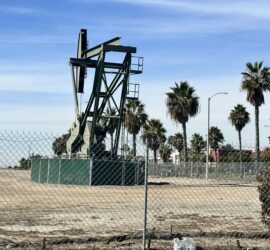
Southern California’s oil boom began in 1892 when petroleum prospector Edward Doheney determined that natural pools of crude oil were buried beneath the City’s active tar pits. As a result, California quickly became the third-largest oil-producing state in the nation. The abundance of oil wells remained part of the local landscape for decades. And some of the less conspicuous oil pumps still operate in the Los Angeles basin today. Even after one hundred years of pumping, Los Angeles’s oil fields have not been exhausted.
As of 2020, petroleum production is still prominent, because crude oil is still a worldwide primary energy source. The second-largest energy source in the United States is natural gas. And the third is coal. In fact, according to the United States Energy Information Administration, the coal industry produced 21 quadrillion BTU in the year 2009. As a result of mining for crude oil, natural gas, and coal, explosive natural gas is abundant underground. Natural gas is about 90% methane in composition. Thus, local Building and Safety Departments institute methane soil gas testing criteria and mitigation standards for developments around production fields.
Petrogenic & Biogenic Methane Gas
The primary source of petrogenic methane gas hazards is fossil fuel reserves. For instance, petroleum pockets and naturally surfacing tar deposits produce an abundance of natural gas. The mining, drilling, and extraction process of these reserves further spread the extent of methane gas migration. In fact, production fields convert old oil wells into natural gas production wells for decades after they finish producing crude oil.
Secondarily, there are biogenic methane gas hazards that result from local landfilling facilities and marshlands. To illustrate, the microbial decomposition of organic matter underground produces high concentrations of landfill methane gas or marsh gases. In fact, landfill and marshland methane gas pockets typically exist at high-pressure levels.
Although the scope of methane testing is mostly continental, sub-oceanic environments can also contain large quantities of the gas. In fact, under the ocean, there are vast amounts of methane hydrates that naturally emit the gas from the subsurface.
Petroleum Gas Methane Testing
Petroleum is a complex combination of hydrocarbon compounds, nitrogen, oxygen, sulfur, and more. Heavier hydrocarbons are the semisolid and solid forms of petroleum, such as tar, coal, and more. Although liquid petroleum (crude oil) is commercially important, its production process also poses long-lasting environmental impacts. Especially in the form of petroleum gas (natural gas). Natural gas consists of lighter-end paraffin hydrocarbons, of which methane is the most abundant. Thus there is a necessity for methane testing within areas of historical petroleum production.
Subsurface Occurrences of Petroleum
Subsurface petroleum deposits occur in the form of oil and gas pools and fields. While a pool is a large body of natural gas or oil under one pressure system, a field is several pools within one larger geologic formation. A province is a large area comprising oil and gas pools and fields, which all relate to one geologic environment. Any of these subsurface petroleum occurrences produce an abundance of petrogenic methane gas migration hazards. Thus, development projects within fields and provinces generally require a methane test and mitigation plan.
Tar, Peat, & Coal in Methane Zones
Today, geologists understand that some Los Angeles Methane Zones may exist due to the tar-to-peat-to-coal process. Accordingly, methane testing requirements and mitigation standards apply.
Natural Gas from Surficial Tar & Petroleum Substances
Petroleum deposits, along with methane soil gas hazards, can exist near the ground surface too. For example, the La Brea Tarpits in Los Angeles, California is a natural occurrence of surficial tar by mode of seepages and springs. Actually, surficial tar seepage is prominent along the entire coast of California and is partially a result of the unique plate tectonic activity of the Coast Range and Transverse Range provinces. Similar oil springs have been apparent in various parts of California, New York, and Pennsylvania since the 1700s. As a result, the shallow geologic formations comprise petrogenic soil gas pockets and require a methane test for land development purposes.
Peat Methane Gas Testing
Peat is a natural substance that forms when decaying vegetation does not have enough oxygen. Geological studies about plant fossils indicate peat is primarily formed within freshwater swamps. The formation process also involves an abundance of petrogenic methane soil gas hazards to shallow soil. To illustrate, after the burial and chemical transformation processes, peat becomes lignite. And with more applications of time, pressure, and temperature increases, lignite becomes bituminous. As more of these depositional processes occur, the end result becomes anthracite coal.
Coalbed Methane Gas
An abundance of methane gas releases itself into the atmosphere during coal mining operations too. However, developers should understand that the primary concern for the methane testing standards is the gases that migrate underground. Most of the time, subsurface gas migration occurs radially upwards and outwards from the source. This typically occurs along with interconnected fractures or the walls of former oil wells. However, some methane soil gas remains within the original coal pocket source.
At the shallower depths, the explosive gas migrates from open fractures within coal beds, and through geologic contracts. And groundwater in coal beds can temporarily trap methane gas, or increase the rate of migration to shallow soils. Concerns with methane vapor migration also arise when the gas invades drinking water sources, such as wells or water lines.
Natural Gas Production Wells & Methane Gas
Accumulations of natural gas comprising methane and hydrogen sulfide can stem from oil fields and coal mines. A methane gas explosion in Los Angeles in 1985 occurred due to methane soil gas accumulations indoors. And this determination was a revolutionary event in the environmental engineering industry for hydrocarbon gas mitigation.
Methane is by far, the largest component of natural gas. It is an aqueous phase compound with four (4) hydrogen atoms and one (1) carbon atom. Thus, it is a hydrocarbon gas. Additionally, hydrogen sulfide exists within the conglomerate gas. Natural gas also comprises non-hydrocarbon components, such as nitrogen, oxygen, carbon dioxide, and more. However, these other components of natural gas are less threatening in terms of combustion. As a result, there are no testing criteria for these substances in the methane testing standards.
Drilling & Pumping Natural Gas
As the petrogenic gas from deeper geologic formations gets extracted by hydraulic fracturing (or fracking), the gas escapes the original formation. In this process, high-pressure drilling fluid is pumped into the formation to crack the rocks and create fractures. The new fracture voids provide a direct conduit for the natural gas to collect inside the well. Unfortunately, some of the gas also escapes the well. From there, it migrates into other geological formations that are above it. As a result, methane soil vapor intrusion risks happen in the shallow soils near oil fields. Consequently, there are laws and building codes that require meeting methane testing standards, as well as methane mitigation standards before building.
Methane Content of Natural Gas
Methane is the predominant chemical compound (by volume) of natural gas. Soil gas of any content and can migrate through geological formations, and into confining structures above ground. As a result, the gas accumulates inside buildings and can concentrate to combustible levels over time. Typically, this hazard is a consequence of historical oil drilling, natural crude oil surfacing, and landfill activities. With this in mind, a methane test determines the concentrations of in situ CH4 at a property. And consequently, a methane mitigation system helps eliminate the risk of combustion.
Hydrogen Sulfide Content in Natural Gas
Hydrogen sulfide is a product of the decomposition of sulfur-containing organic matter. This gas is easily identifiable by its initial “rotten egg” odor. Hydrogen sulfide has the chemical formula “H2S” and it is found in many of the same areas as methane. For example, landfills, swamplands, sewers, petroleum fields, and waste-water treatment facilities. One dangerous characteristic of H2S is that it can impact a person’s ability to detect its distinct odor and time. For instance, at high enough concentrations, persons within a room containing hydrogen sulfide may no longer be able to smell it after a short period.
The concern for explosion due to hydrogen sulfide is less than methane gas. Thus, the methane testing standards do not require geologists to report H2S concentrations. Although, overexposure to high levels of hydrogen sulfide can lead to respiratory failure and death by asphyxiation. Upon exposure, general symptoms include dizziness, nausea, and headaches. Per the Occupational Safety and Health Administration (OSHA) the permissible exposure limit (PEL) for H2S is 10 ppm. And this value bases itself on an 8-hour time-weight average.
Methane Gas Explosions
The term “Lower Explosive Limit” or “LEL” means the minimum concentration of gas in the air allowable for it to burn. This value is traditionally reported in percentage, by volume. If the methane-to-oxygen ratio is below the LEL, the mixture is too lean to burn. On the other hand, the “Upper Explosive Limit” or “UEL” means the maximum concentration of the subject gas in the air allowable for burning. If the methane-to-oxygen gas ratio is above the UEL, the mixture becomes too rich to ignite.
Methane gas has a lower explosive limit (LEL) of 5% and an upper explosive limit (UEL) of 15%. Thus, the range of concentrations between the LEL and UEL is the hazardous explosive range. Within this range, the methane-gas-to-other-air mixtures will allow for combustion to occur.