What Could Cause False Readings in Methane Soil Testing?
False positive methane readings during soil methane testing are uncommon. In fact, in the event of an error, the more frequent concern involves false negative results. This is usually caused by analyzing equipment malfunction, probe leakage, atmospheric air intrusion, or improper sampling procedures. Inaccuracies in this process usually dilute methane concentrations for samples collected. As a result investigators underreport methane conditions, rather than over-report.
Soil methane testing is a critical component of evaluating potential methane hazards at development sites, landfills, former oil fields, and properties affected by subsurface gas migration. Accurate test results help engineers, developers, regulators, and property owners assess risk, comply with methane regulations, and design appropriate mitigation measures when necessary. However, understanding the factors that can influence methane soil gas data is essential. Understanding what can influence soil methane testing results is essential for obtaining reliable data and making informed environmental and engineering decisions.
Natural Factors That Cause Variable Results During Methane Soil Testing
Firstly, it is important to understand that there are natural factors which cause different results for a methane test on the same property. Below are the two most common factors.
1. Methane Soil Gas Measurements Actually Change on the Property Depending on Temperature, Weather, Season, Time of the Day, and Saturation.
Methane concentrations detected in the subsurface are not static. By nature, the soil gas is dynamic underground, and can fluctuate in between two different sampling events. As a result, two separate methane investigations performed at the same property on different days will likely generate different results.
Environmental and weather conditions play a significant role in these variations. Changes in weather patterns and barometric pressure can affect soil moisture levels, permeability, porosity, and soil gas pressure within the formation. These factors constantly influence both the storage and movement of methane gas through soil. As a result, there will be a difference in measurements from the same location at different times.
Because these conditions are constantly changing, methane levels recorded during one testing event may be higher or lower than those measured at another time. The magnitude and direction of these changes are difficult to predict. Accordingly, a repeat methane survey can produce results that differ from those of the original investigation without necessarily indicating an error in either test. For regulatory purposes, the Los Angeles Methane Code identifies the Design Methane Concentration as the highest methane concentration detected during site testing.
2. Methane Concentrations do Change by Depth and Location on the Property
Methane soil gas conditions do vary considerably across the same property and within different geological layers. The same factors that contribute to temporal variability can also create differences from one sampling location or depth interval to another.
For example, a soil gas probe installed to a depth of 20 feet at one area of a site may encounter a geologic layer with relatively low methane content, resulting in a lower methane classification. A second probe installed to the same depth only 5 feet away may intercept a different soil or geologic unit with substantially higher methane concentrations. Similar differences can occur between shallow and deeper sampling intervals at a single test location.
Consequently, subsequent methane investigations may report results that differ from prior testing, even when both studies are technically accurate. Recognizing this inherent variability, LADBS testing standards mandate that sample collections occurs from multiple locations throughout a site, and at multiples times on different days. This is to provide a more representative assessment of overall methane conditions.
Common Causes of False Readings in Soil Methane Testing
Now that we’ve explained some of the natural reasons why methane test results can vary on the same property, we can take a closer look at the potential causes of inaccurate readings during methane soil testing. When errors occur, the result is more likely to be a false negative (i.e. methane concentration reads lower than actual). Consequently, false readings in methane soil testing reports typically underreport methane levels rather than produce artificially high results.
1. Faulty Probe Installation
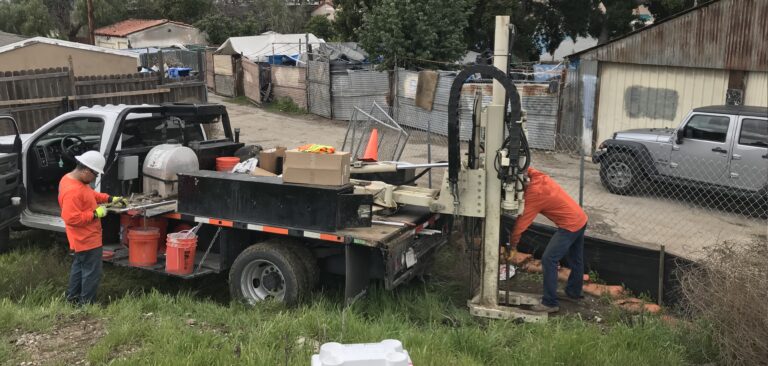
A faulty probe installation causes lower methane concentrations. The result is a diluted soil gas sample mixed with atmospheric air, which reads a lower than actual concentrations. This is one of the most common causes of inaccurate methane measurements. Leaks in tubing, improperly sealed probes, or defective sample valves can dilute methane concentrations and produce artificially low readings.
Environmental professionals typically evaluate oxygen and carbon dioxide levels alongside methane concentrations to determine whether atmospheric intrusion may have affected the sample quality. Although this approach isn’t a surefire way to determine whether the sample has been diluted or not.
2. Atmospheric Air Intrusion During Sampling
During methane soil testing, a sampling error can result in an artificially low methane concentrations if atmospheric air is introduced into the sample. Ambient air dilutes the methane-rich sample, reducing the concentration below the true value. This type of error does not indicate an absence of methane; rather, it represents a false low result caused by sample dilution. Therefore, proper sampling techniques, leak-free equipment, and careful handling procedures are essential to ensure that measured methane concentrations accurately reflect actual field conditions.
3. Fluctuating Water and Moisture Levels
Subsurface methane concentrations can vary over time due to changes in soil moisture conditions. Irrigation, leaking water and sprinkler lines, septic or sewage leaks, and rainfall can influence the dynamics of methane underground. Moisture level changes affect the porosity, permeability and transmissivity of the soil. Because these conditions can change over time, a single methane soil testing event may not fully represent long-term site conditions. The soil conditions from which a sample was drawn are not likely to be the same as from an earlier testing period. For this reason, multiple sampling rounds are often recommended to obtain a more comprehensive and reliable assessment of subsurface methane conditions.
3. Other Nearby Sources of Organic Decomposition
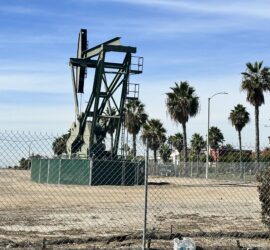
Methane is commonly the byproduct of decomposition of organic material. Nearby sources such as landfills, buried debris, wetlands, and sewer infrastructure can produce biogenic gases. Other naturally occurring organic-rich soils from nearby sources such as oil wells, natural gas wells and underground petroleum reserves can produce petrogenic gasses.
Why Accurate Soil Methane Testing Matters
Methane is a combustible gas that can pose both safety and regulatory concerns when it accumulates beneath structures. False readings can lead to an underestimation of potential risks. Reliable Soil methane testing helps support site development, construction design, regulatory compliance, and long-term safety.
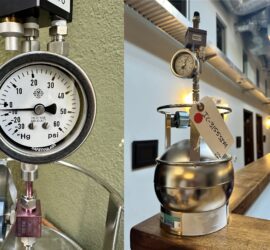
Experienced environmental consultants use sampling protocols, calibrated equipment, quality control measures, and more to ensure the highest level of data reliability.
Geo Forward’s Approach to Soil Methane Testing
At Geo Forward, our environmental professionals conduct soil methane testing investigations using industry-standard methodologies and rigorous quality assurance procedures. We evaluate site geology, historical land use, vapor migration pathways, and regulations to provide proper assessments and practical recommendations.
Need professional soil methane testing services? Contact Geo Forward to discuss your project and schedule a methane soil gas assessment.