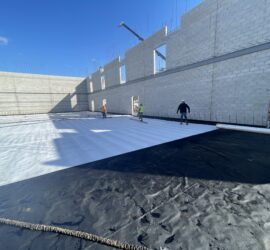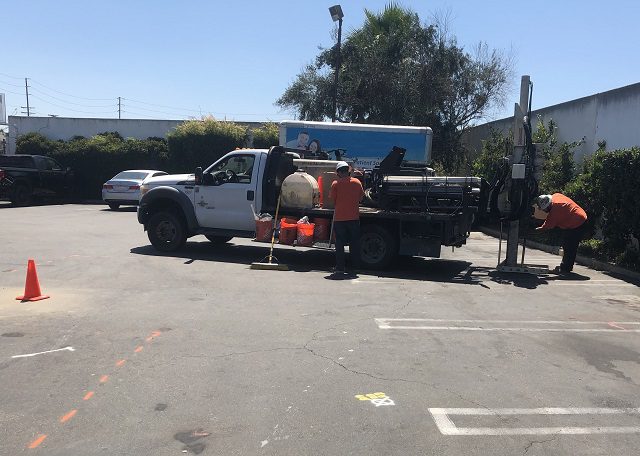
In the City of Los Angeles, the active parts of a methane mitigation system, the methane gas detection sensors, alarm, control panel and mechanical ventilation, must be tested every year under LAFD Chief’s Regulation 4. This page explains what the annual Reg 4 methane test covers, who can perform it, what typically fails and how Geo Forward arranges the test for the methane systems we design.
Why Methane Gas Detection Systems Need Annual Testing
Buildings in a Methane Zone or Methane Buffer Zone are built with a methane mitigation system sized to the site design level set by methane testing. At higher site design levels, the passive barrier and vent system is backed up by active components that watch for gas and move it out from under the building.
Section 91.7106 of the Los Angeles Building Code (the City’s Methane Code) puts the annual and maintenance testing of these gas detection and mechanical ventilation systems under the Fire Department, following Fire Prevention Bureau (F.P.B.) Requirement No. 71 and Fire Chief’s Regulation 4, Section 4J. The same section makes the building owner responsible for maintenance and service under the manufacturer’s written instructions.
Which Methane System Components Are Tested?
The Reg 4 test focuses on the components that detect gas and respond to it. Depending on the design, these can include:
- Methane gas detection sensors in occupied spaces, crawl spaces, utility rooms or vent risers
- The control panel that reads the sensors and triggers the alarm and fans
- The methane alarm system, with audible and visual signals for occupants, and any connection to building management or a central station
- The mechanical extraction system: fans or blowers that pull gas from the sub-slab vent piping and discharge it through the vent riser
- Mechanical ventilation in the lowest occupied space, where the design requires it
- Soil gas pressure sensors, where the system uses them
- Wiring, power supply and backup power between these parts
The certified tester checks that each part works and that the system responds as designed, for example that a sensor exposed to test gas triggers the alarm and starts the fans. LAFD’s test procedures also require the tester to confirm that the gas detection system and its associated components are in proper operating condition and maintained under F.P.B. Requirement No. 71 and the Methane Code. For a description of each part, see our guide to methane mitigation system components.
Passive components (the impervious membrane, gravel blanket, perforated pipe and trench dams) are not part of the annual test. They are verified once, during construction, by methane deputy inspection.
Who Can Test a Methane Gas Detection System?
The Methane Code requires the test to be performed by a person with a valid Certificate of Fitness for Gas Detection Systems. In practice, that means an LAFD Chief’s Regulation 4 tester certified in the Gas Detection category. LAFD keeps the current list of active Gas Detection testers, with each tester’s certification expiration date, on its Gas Detection tester page.
A tester certified only for fire alarms or sprinklers cannot sign off a methane system. Before the test, confirm the tester’s Gas Detection certification is current. Our page on LAFD Reg 4 certified testers explains how to check.
How Often Is the Methane System Tested?
Every year. The Methane Code refers to an annual test, and Reg 4 annual tests are generally done in the same month each year, on the system’s anniversary date. The first annual test date usually follows the system’s final acceptance and occupancy. See the full Reg 4 testing frequency schedule for other systems in the same building.
The Annual Reg 4 Methane Test, Step by Step
- Gather records. Approved methane mitigation plans, LAFD equipment approvals, the last test report and any repair records.
- Schedule a certified tester. Book an LAFD-certified Gas Detection tester before the anniversary month.
- Notify occupants. Alarms will sound during testing, so let tenants and building management know.
- Functional testing. The tester checks the sensors, panel, alarm signals and fan operation, and confirms the system responds as designed.
- File the results. Results go to LAFD on Fire Department-approved forms within 7 days of the test, as LAFD and your Fire Inspector direct.
- Repair and retest. Defects must be corrected right away and no later than 30 days after the initial test, then retested.
- Keep copies on site and set next year’s test date.
Common Reasons a Methane System Fails Reg 4
- Sensors out of calibration, contaminated or past their service life
- Extraction fans that do not start, run weakly or have failed motors or belts
- Control panel faults, dead backup batteries or tripped breakers
- Alarm horns or strobes that are disconnected, painted over or blocked by tenant improvements
- Sensors removed or relocated during a remodel without updated plans
- Blocked or damaged vent riser discharge points
Some fixes are routine maintenance. Others, like relocating sensors or changing fans, can change how the system performs. Those should be reviewed against the original methane mitigation design and may need plan approval.
Related Owner Duties Under the Methane Code
- Emergency procedures: except for single-family dwellings, buildings required to have a gas detection system or sub-slab vent system must establish LAFD-approved emergency procedures, name a responsible person as safety director, and post the Fire Department’s phone number and the approved emergency plan.
- Notification placard: non-residential buildings built with an impervious membrane must post and maintain a permanent placard at the front entrance stating that the membrane is present.
- Approved equipment: replacement devices must be approved by the Fire Department under F.P.B. Requirement No. 71, just like the originals.
How Geo Forward Handles Your Annual Methane System Test
Geo Forward does not perform Reg 4 testing itself. We design active and passive methane mitigation systems and provide deputy inspection during construction. Because the annual Reg 4 test is an inspection of that same active system, we arrange for an LAFD-certified Gas Detection tester to perform the test on our clients’ methane mitigation systems. We provide the tester with the approved plans and system details, and if something fails, our geologists help determine whether it is a maintenance item or a design issue so it can be corrected within LAFD’s 30-day window.
Buying or financing a building in a methane zone? Ask for the last few Reg 4 methane test reports. We review them during a Phase 1 environmental site assessment or property condition assessment.
FAQs
Is annual methane system testing required in Los Angeles?
Yes, for buildings with methane gas detection and mechanical ventilation systems required by the Methane Code. The annual test follows LAFD F.P.B. Requirement No. 71 and Chief’s Regulation 4, Section 4J.
Do passive methane systems need a Reg 4 test?
The Reg 4 test applies to the gas detection and mechanical ventilation equipment. A system with no detection or ventilation equipment has nothing for the annual test to cover, but ask your Fire Inspector to confirm what applies to your building.
Can my fire alarm company test the methane system?
Only if the person testing holds a current LAFD Gas Detection certification. Fire alarm certification alone does not cover methane gas detection.
What if my system was designed by another firm?
Call us. We can review the approved plans and arrange the annual test with a certified Gas Detection tester.
Related Pages
Schedule Your Annual Methane System Test
Call (888) 930-6604, contact us, or request a proposal, and we will arrange your Reg 4 methane gas detection test with an LAFD-certified tester.
Sources
- Los Angeles Fire Department, Chief’s Regulation 4
- Los Angeles Fire Department, Gas Detection Testers
- Los Angeles Department of Building and Safety, Site Testing Standards for Methane
- City of Los Angeles, Methane Code, Ordinance No. 175,790
- City of Los Angeles, Methane Code, Ordinance No. 180,619
- Los Angeles Department of Building and Safety, Methane Mitigation System Plan Check Correction Sheet (2023)
Technical Review
Reviewed by Adam Azad Kaligi, PG
Founder and Licensed Professional Geologist, Geo Forward, Inc.
Last updated: November 2026