Hydraulic lift removal is the excavation and removal of an in-ground (underground) hydraulic lift: the hoist cylinder and piston, the hydraulic fluid reservoir and the piping, followed by soil testing to show whether hydraulic oil leaked, cleanup of any contaminated soil, and certified backfill. Geo Forward is a geologist-led hydraulic lift removal contractor. Our licensed contractors, field geologists and hazardous waste handlers take each lift out from permit to closure report, so property owners, buyers and lenders get one clear answer: the lift is gone and the soil is documented. Call (888) 930-6604 or request a proposal.

Hydraulic Lift Removal Services
- In-ground car lift and auto lift removal (single-post and two-post lifts at auto repair shops, dealerships, gas stations and fleet yards)
- Hydraulic hoist and piston removal, including inground lifts with a separate hydraulic oil reservoir (UST)
- Hydraulic elevator removal (building elevator pistons and casings), using the same process
- Hydraulic fluid evacuation, cleaning of lift parts, and hazardous waste transport with manifests
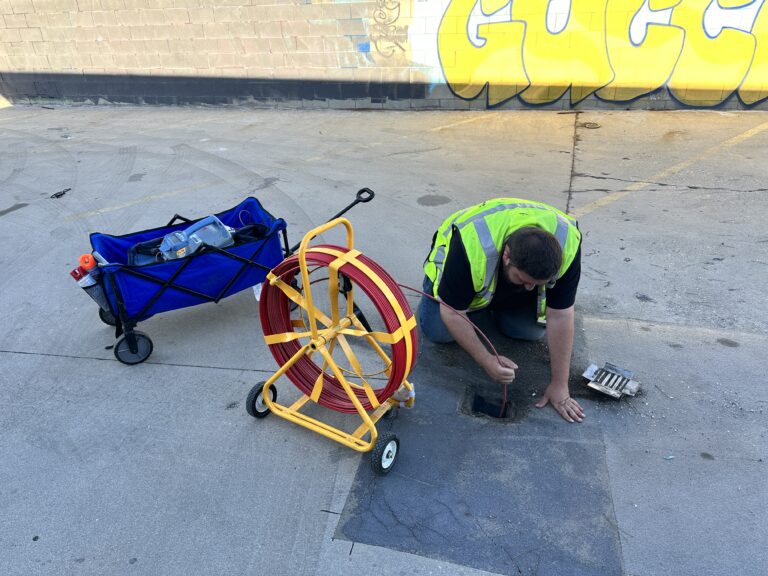
- Ground penetrating radar (GPR) to locate lifts, tanks and underground utilities
- Grading and excavation with lateral support where needed
- Soil sampling and laboratory testing under a professional geologist
- Contaminated soil removal if hydraulic oil leaked
- Certified clean backfill and soil compaction testing
- A closure report for your records, your lender and the environmental agency
If the site also has fuel or heating oil tanks, we remove those too. See underground storage tank removal and oil tank removal.
Why In-Ground Hydraulic Lifts Are an Environmental Concern
An underground lift system is made of hoists or pistons filled with hydraulic fluid, plus manifolds, pipelines and, on many systems, a separate oil reservoir. Over decades, seals wear, pipe connections loosen and steel corrodes, so lifts leak below the slab where no one can see it. Removing a lift the wrong way can release the remaining fluid into soil and, in some areas, groundwater.
The chemicals of concern for a hydraulic lift are:
- Oil-range total petroleum hydrocarbons (TPH-o) from the hydraulic oil itself
- Polychlorinated biphenyls (PCBs), which were used in hydraulic fluids before they were banned in 1979, so older lifts can still contain them
- Volatile organic compounds (VOCs) and semi-volatile organic compounds (SVOCs)
The San Francisco Bay Regional Water Board lists hydraulic systems among the equipment that can release PCBs, and the US EPA notes that PCBs can remain in oil used in motors and hydraulic systems made before 1979.
Are Hydraulic Lifts Regulated Like Underground Storage Tanks?
Usually not, but the soil around them still matters.
- Federal: the EPA’s UST rule (40 CFR 280.12) excludes hydraulic lift tanks from the definition of an underground storage tank.
- California: hydraulic lift tanks have been permanently exempt from the state UST law since January 1, 1996 (State Water Board LG 141; Title 23 CCR 2621), so they do not need UST operating permits.
- Texas: TCEQ’s UST rules (30 TAC Chapter 334) also exempt or partly exclude in-ground hydraulic lifts.
- Local rules still apply. Some counties set their own procedures. San Mateo County has a written hydraulic lift removal policy, and Monterey County calls for soil samples about two feet below each former lift and reservoir.
- Air district rules: in the South Coast AQMD area, digging soil that may contain VOCs falls under Rule 1166, which requires an approved mitigation plan and monitoring. Soil reading 50 ppm or more on a hexane-calibrated vapor analyzer counts as VOC-contaminated.
- Grading and excavation permits from the city or county apply to the dig itself, especially near foundations, walls and property lines.
We confirm which agency has authority before work starts and pull the permits for you.
The Hydraulic Lift Removal Process
1. Records Review and Permits
We gather what is known about the lift: age, type, fluid and past leaks. A recent Phase 1 ESA or Phase 2 ESA can speed up the permit applications and the EPA waste profile, as long as the lab data is current. We then obtain grading/excavation and environmental permits and set up waste profiles for legal transport and disposal.
2. Utility Scan With Ground Penetrating Radar
A geophysical survey finds utilities before digging, confirms whether other buried features (such as an underground storage tank) are nearby, and shows slab thickness and rebar or post-tension cables.
3. Disconnect the System and Evacuate the Hydraulic Fluid
Some lifts hold fluid in the cylinder; others have a separate reservoir. A technician decommissions the system, and a vacuum truck removes the remaining fluid so nothing spills during removal.
4. Saw-Cut the Slab
The concrete over the lift is cut along lines that protect the building. Where footings or reinforcement are involved, a structural engineer confirms the cut locations, and the slab and reinforcement are rebuilt correctly afterward.

5. Hydraulic Lift Excavation and Lateral Support
Deeper digs near roads, walls, foundations or property lines often need shoring. Our engineering geologist designs the lateral support, and the crew excavates around the hoist. Environmental professionals monitor soil vapor, separate any stained soil into its own stockpile, and follow the soil management plan.
6. Pull, Clean and Haul the Hoist and Reservoir
A crane rated for the load lifts out the piston and casing. Parts are pressure-rinsed, the rinse water is vacuumed up, and everything leaves the site with hazardous waste manifests and disposal records.
▶
7. Soil Sampling
A professional geologist collects soil samples from the pit following ASTM practice and the local agency’s requirements. Typical lab tests are TPH, VOCs, SVOCs and PCBs.
8. Cleanup If Needed
If the samples show contamination, we remove the affected soil and confirm with more samples. Larger impacts move to a remediation plan.
9. Certified Backfill, Compaction and Closure Report
Clean backfill goes in thin lifts and is compacted and density-tested so the floor does not settle later. The geologist of record then signs a report covering the removal, lab results, disposal records and compaction.

How Long Does Hydraulic Lift Removal Take?
Fieldwork usually takes about a week. The final report follows in about 20 business days. When an environmental agency oversees the work, it then reviews the report and issues a No Further Action (NFA) letter, which adds agency review time.
How Much Does Hydraulic Lift Removal Cost?
Hydraulic lift removal typically costs $15,000 to $60,000, and some projects cost more. The cost to remove a hydraulic lift depends on:
- The number of lifts, and single-post vs. two-post designs
- Whether there is a separate hydraulic oil UST or the fluid is held in the cylinder
- Distance from the building foundation or property line, and whether shoring is needed
- Slab thickness, reinforcement and casing depth
- Whether contamination is found and how much soil must be removed
- Laboratory analyses, disposal fees, permits and agency fees
We give a written proposal after a short questionnaire and, where needed, a site visit.
Hydraulic Lifts in Phase 1 and Phase 2 Environmental Site Assessments
During a Phase 1 ESA, the environmental professional decides whether an in-ground lift is a recognized environmental condition (REC), based mainly on how likely it is to have leaked. Older lifts carry more risk. A REC often leads to a Phase 2, where we use GPR to locate the lifts and test the soil next to them, and then to removal. Lenders often ask for lift removal before closing on a gas station or auto repair property. Because we do the Phase 1, the Phase 2 and the removal, there is no hand-off between firms.
Why Choose Geo Forward as Your Hydraulic Lift Removal Contractor
- Geologist-led. Every removal is overseen by Adam Azad Kaligi, PG (Licensed Professional Geologist, CA and TX) and Michael Sabo, Technical Director (HAZWOPER), with Lariza Damljanovic, Director of Operations, managing each project from start to finish.
- Licensed contractor. CSLB License 1010931, and licensed, insured and credentialed nationwide.
- One team, one report. Permits, GPR, excavation, sampling, cleanup, backfill and the closure report.
- Trusted by lenders. We work for SBA lenders, national and community banks, private lenders, attorneys, brokers and developers.
- Local offices: Los Angeles, Pasadena, El Segundo, North Hollywood, Santa Clarita, San Francisco and Houston.
Hydraulic Lift Removal FAQs
How much does it cost to remove a hydraulic lift?
Most hydraulic lift removal projects cost $15,000 to $60,000, and some cost more. The price depends on the number of lifts, whether there is a separate hydraulic oil UST, distance from foundations and property lines, and whether contaminated soil is found.
How long does hydraulic lift removal take?
About a week of fieldwork and about 20 business days for the final report. If an environmental agency oversees the project, its review and No Further Action (NFA) letter take additional time.
Do in-ground hydraulic lifts have to be removed?
There is no federal or California UST requirement to remove them. Owners usually remove lifts when a shop closes, before a sale or refinance, or when a Phase 1 flags them as a REC. Some local agencies set removal and sampling procedures.
Is a hydraulic lift reservoir an underground storage tank?
Not under federal or California UST law: both exclude hydraulic lift tanks. Leaked hydraulic oil in the soil can still require testing and cleanup.
Do you remove hydraulic elevators?
Yes. Hydraulic elevator pistons and casings are removed with the same process: fluid evacuation, excavation, soil sampling and certified backfill.
Do you remove car lifts at auto shops and gas stations?
Yes. In-ground car lifts, auto lifts and hoists at repair shops, dealerships, gas stations and fleet yards are the most common lifts we remove. We often remove lifts and USTs in one mobilization.
Get a Hydraulic Lift Removal Quote
Call (888) 930-6604 (Mon to Fri, 8 am to 5 pm PT) or order a proposal.
Sources
- 40 CFR 280.12, Definitions (hydraulic lift tank exclusion), eCFR
- LG 141: Permanent Hydraulic Lift Tank Exemption, California State Water Resources Control Board
- Title 23 CCR 2621, Exemptions, Cornell Law School LII
- 30 TAC 334.4, UST Exclusions (Texas), Cornell Law School LII
- Learn About PCBs, US EPA
- Identifying PCB-Containing Materials, San Francisco Bay Regional Water Board
- Rule 1166 Soil Mitigation Plan, South Coast AQMD
- Removal Policy for Hydraulic Lifts, San Mateo County Health