Methane Mitigation Soil Gas Pressure Sensor

Methane Mitigation Soil Gas Pressure Sensor

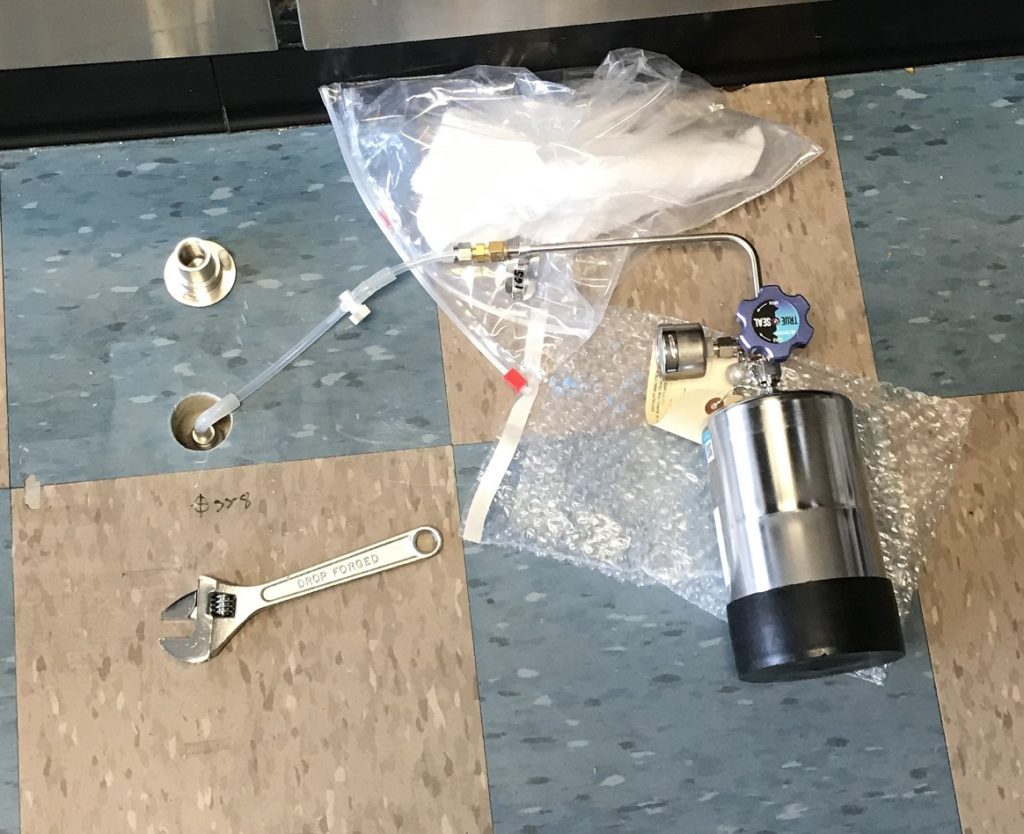
Methane Mitigation Soil Gas Pressure Sensor: A Methane Mitigation Soil Gas Pressure Sensor is a device that measures and communicates sub-slab soil gas pressure to a methane control panel system. High levels of methane soil gas then trigger the integrated methane alarm system to notify occupants of danger. Much like the process of a methane soil gas test, this sensor records earth-induced pressure, as well as hydrocarbon gas concentrations. In fact, these parameters are necessary for site design level determination, as well as proper methane mitigation.

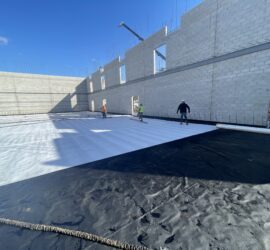
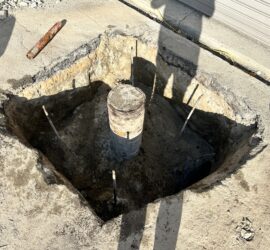
Methane Mitigation Soil Gas Pressure Sensors are typically part of an active mitigation system. They are set by professional vapor barrier installers, usually above the gravel blanket and methane barrier but below the finished concrete slab. In addition to biogenic and petrogenic natural gas, geologists use these sensors and probes to measure other toxic vapors, such as various volatile organic compounds (VOCs).
Methane Mitigation Soil Gas Pressure Sensor
Methane Mitigation Soil Gas Pressure Sensor – Photo by AAK Geo Forward

Similar Posts

  • Concrete Arch Dam

    What is a Concrete Arch Dam? A Concrete Arch Dam is a curved freshwater-retaining structure that is concave in the hydro-geologically down-gradient direction, and uniformly thick from the base to top. With Concrete Arch Dams, a major part of the water load value gets distributed to the abutments of the dam. Thus, Concrete Arch Dams…

  • Stratosphere

    Stratosphere Stratosphere: The stratosphere of a terrestrial planet is the second-lowest member of the atmosphere. On Earth, the stratosphere starts atop the troposphere at approximately 10 kilometers above mean sea level, and terminates roughly 50 kilometers above mean sea level. In fact, geologists understand that the Earth’s ozone layer exists within the stratosphere, which absorbs…

  • Juvenile Water

    Juvenile Water Juvenile Water: In geology, juvenile water is water derived directly from magma, introduced into the Earth’s surface through geological processes such as magmatic and volcanic activity. Since juvenile water is derived from Earth’s center, its characteristics, are associated with higher temperatures and pressures.

  • Permeability

    Permeability “Permeability” in engineering geology and geotechnical engineering refers to the property of a soil sample (or porous rock) which relates to transmitting a fluid within. Permeability measures the relative case of flow under unequal pressure. Permeability is calculated using Darcy’s Law.

  • Hydro-Geology (Hydrogeology)

    Hydro-Geology (Hydrogeology) Hydro-Geology (Hydrogeology): Hydrogeology is a branch of geology that relates to the study of the earth’s natural groundwater and surface water systems. Whereby geologists study the physical and chemical properties of unconfined aquifers, confined aquifers, river systems, lake beds, oceanwater, natural geysers, and more.